
There has been a lot of discussion recently about whether websites are still as useful as they used to be.
It is a fair question.
The internet has changed very quickly. Google now shows AI answers at the top of many searches. People increasingly ask ChatGPT and other AI tools for information instead of visiting several different websites. YouTube, Pinterest, Facebook and other platforms are all competing for attention as well.
So yes, the old model has changed.
A few years ago, many website owners worked to a fairly simple formula:
Write content. Rank in Google. Get visitors. Make money.
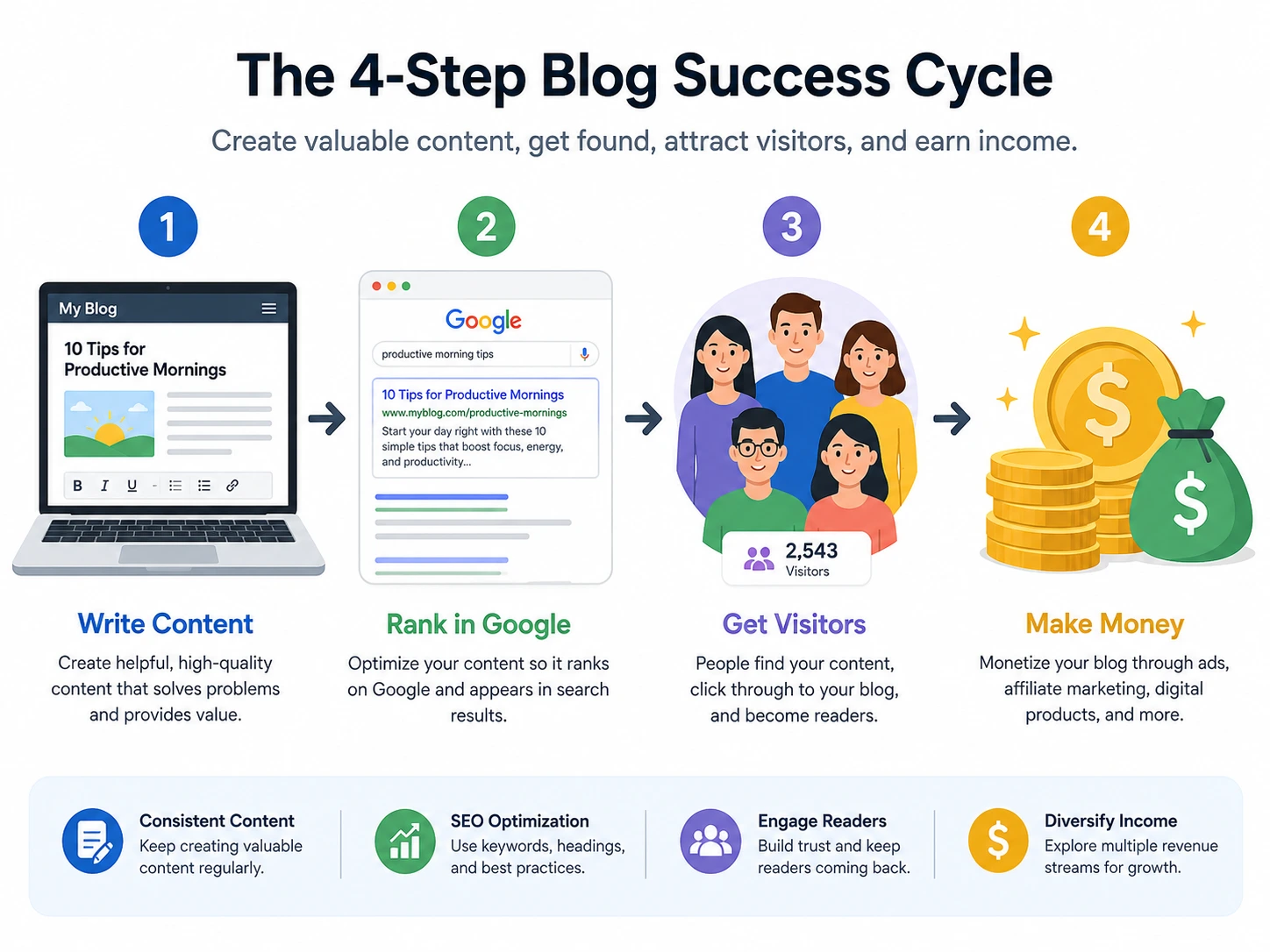
That still happens, but it is no longer something we can rely on in quite the same way.
If someone asks a simple question such as “what does aperture mean?” or “how do I clean binoculars?”, AI can often give them a quick answer without them ever clicking through to a website.
That is the reality.
But I do not think it means websites are finished.
I think it means websites need to do a better job.
A Quick Answer Is Not the Same as Real Guidance
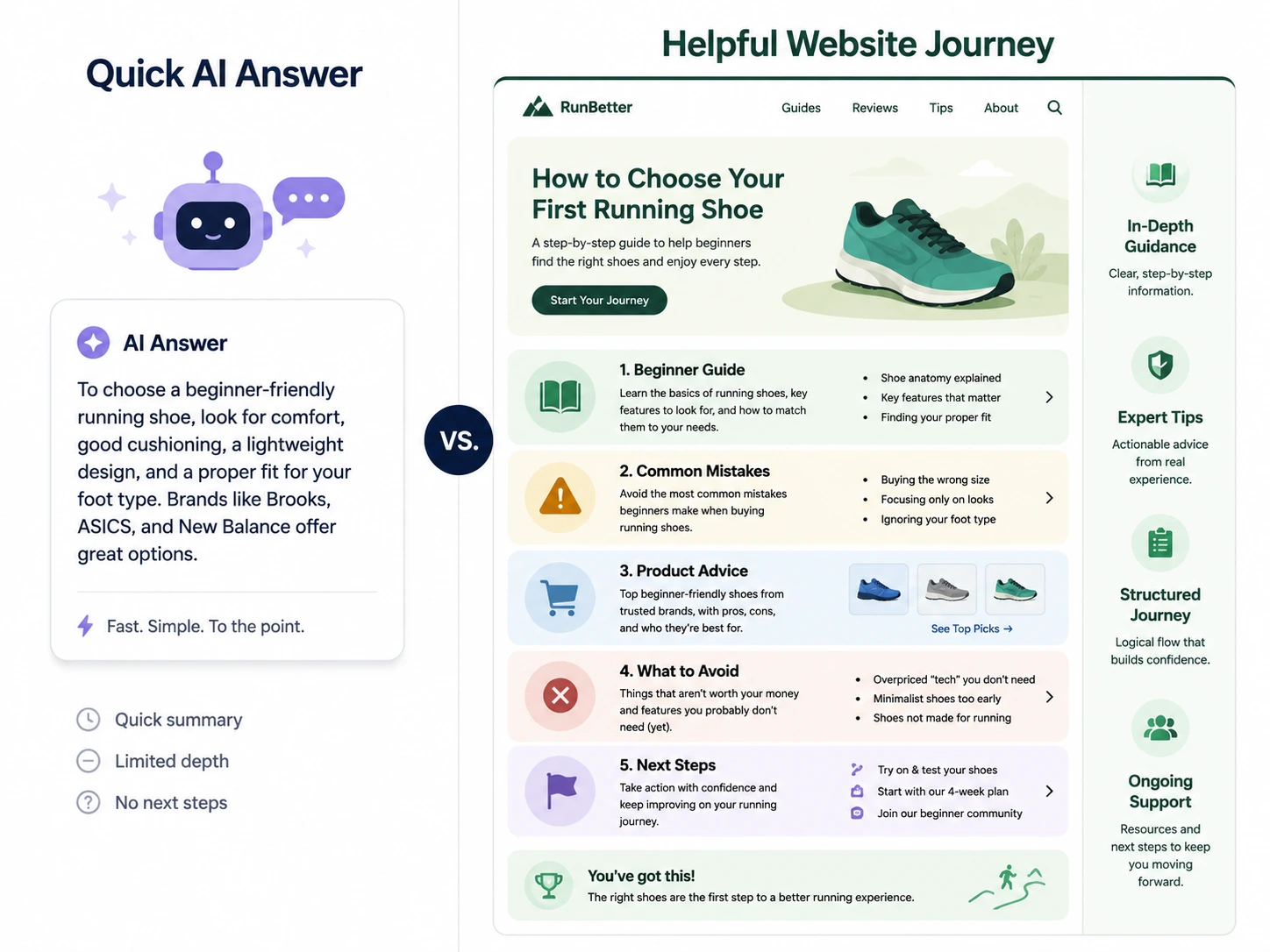
AI is very good at quick answers.
But a quick answer is not always enough.
If I want a short definition, AI may do the job perfectly well. If I want a basic explanation of a simple topic, AI may be enough.
But what if I want to start birdwatching?
Or buy my first telescope?
Or build a small garden water feature?
Or create a website around one of my hobbies?
That is different.
I do not just need a short answer. I need help joining the dots.
I need someone to explain what matters, what does not, what beginners often get wrong, what choices are sensible, and what I should probably avoid.
That is where helpful websites still have real value.
Take telescopes as an example.
A beginner may start with a simple thought:
“I’d love to see the Moon and maybe Saturn’s rings.”
That sounds straightforward.
Then they run into all the confusing terminology: reflector, refractor, aperture, focal length, eyepieces, mounts, tripods, Dobsonians, motor drives and more.
A short AI answer may help a little.
But a genuinely useful website could do much more. It could explain the whole journey in plain English. It could compare the options, show what really matters for beginners, and help the reader avoid wasting money.
That is a completely different kind of value.
The Website Is No Longer Just a Traffic Machine
For a long time, many people thought of websites mainly as traffic machines.
You published content in the hope that Google would send you visitors.
Now, the website is becoming something a bit different.
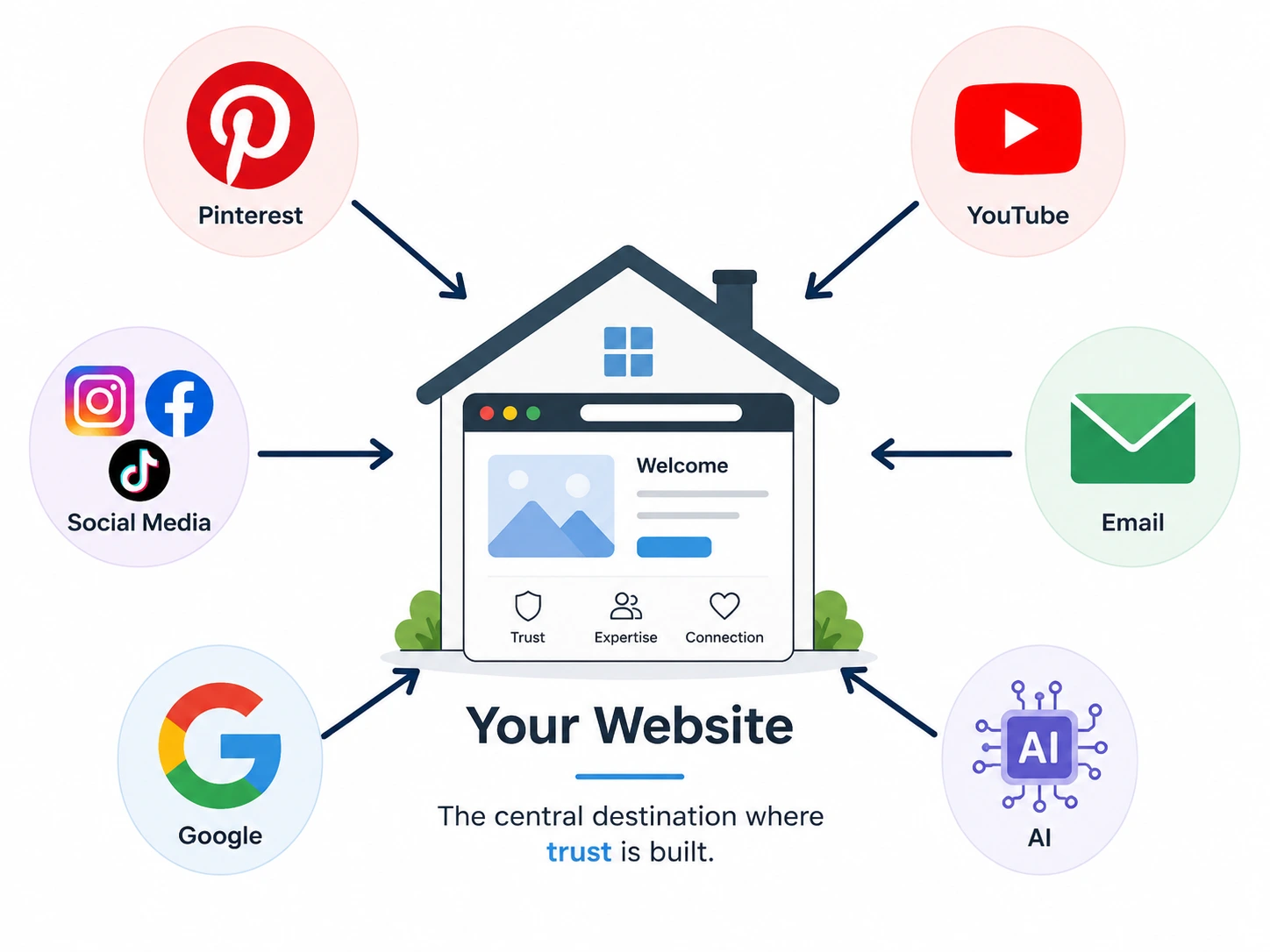
It is becoming more of a home base.
People may discover you through Pinterest, YouTube, social media, email, communities, or even through AI.
But once they are interested, they still need somewhere deeper to go.
They need somewhere they can properly explore what you do, what you recommend, and whether they trust you.
That is where the website still matters.
Social platforms are useful, but they are not really yours. Algorithms can change. Reach can disappear. Accounts can be restricted or even shut down.
A website on your own domain gives you a place you actually control.
That does not mean people will automatically find it. They will not. You still need discovery.
But when they do find you, your website can turn a passing moment of attention into something deeper.
Online Business Is Still Human to Human
This is the part I think matters most.
We can talk all day about AI, SEO, traffic, content strategy and platforms.
All of those things matter.
But at the centre of it all, there is still one person trying to communicate with another person.
That is easy to forget online.
When you write an article, you are not really writing for “traffic.” You are writing for someone sitting at home, probably slightly confused, trying to make a better decision.
Imagine meeting that person in real life.
Suppose someone told you they were thinking about getting into birdwatching.
Would you immediately say:
“Hi, nice to meet you. Here are some binoculars I recommend. Please buy them.”
Probably not.
If you did that to everyone you met, people would start avoiding you very quickly.
In real life, you would have a conversation first.
You might ask whether they want to watch birds in the garden, go on woodland walks, visit nature reserves, or take binoculars on holiday.
You might explain what the numbers on binoculars mean. You might mention that the most powerful-looking pair is not always the best choice. You might talk about comfort, weight, field of view and whether they wear glasses.
Only after that would a recommendation feel natural.
A helpful website should work in the same way.
It should not rush straight to the affiliate link.
It should help the person understand the problem first.

This Is Where Many Affiliate Sites Go Wrong
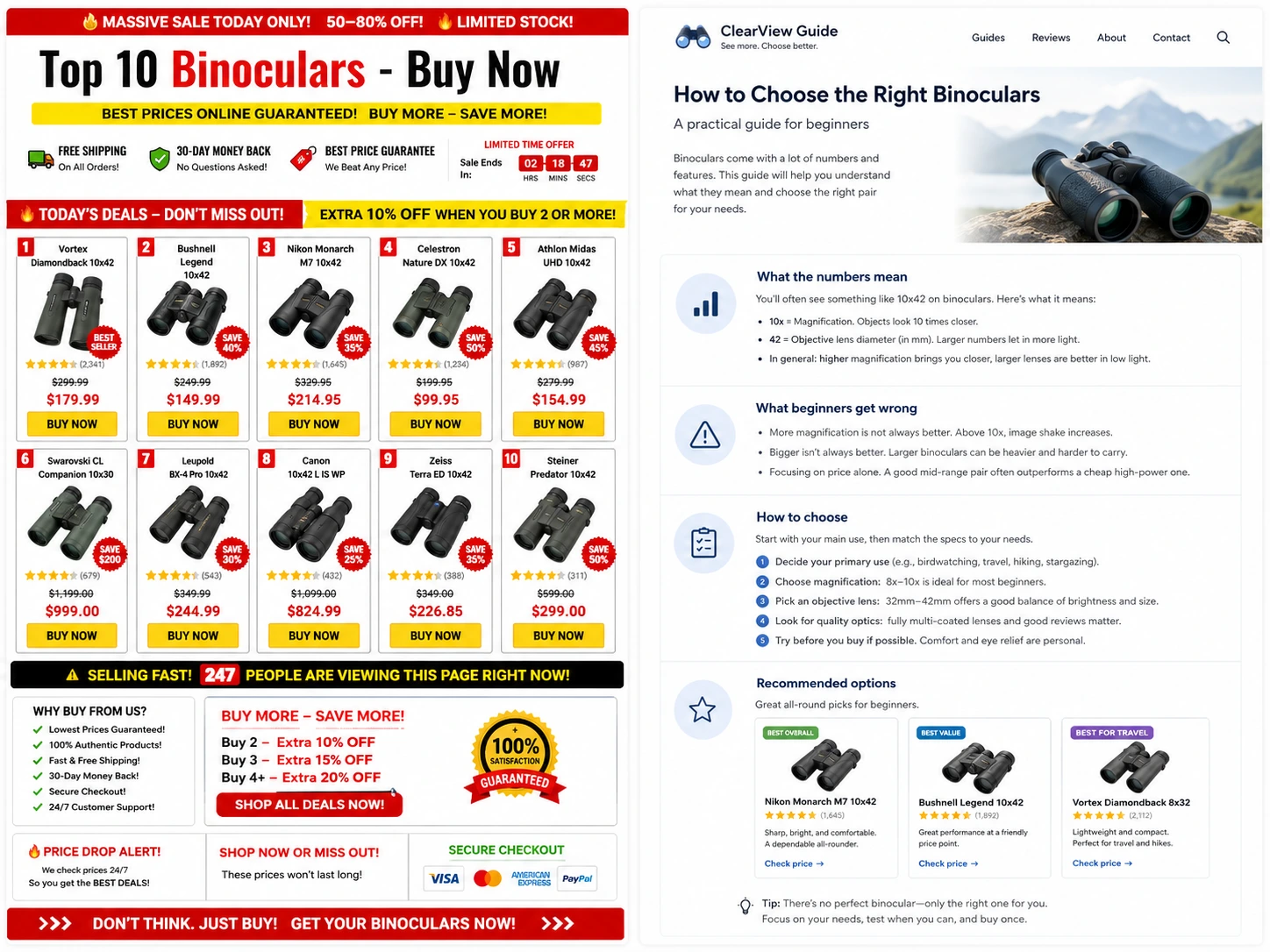
The weakest affiliate content often starts with the product instead of the person.
It says, in effect:
“Here are ten things you can buy.”
But the reader may not even understand what they need yet.
That is why helpful content matters. It creates context before the recommendation.
For example, instead of saying:
“Here are the best binoculars for birdwatching,”
you might say:
“Choosing binoculars for birdwatching can be confusing when you are new, so here is what the numbers mean, what matters most, what beginners often overlook, and which type of binocular is likely to suit different situations.”
That feels different.
The recommendation is no longer being pushed at the reader.
It is being offered after the explanation.
That is the difference between selling first and helping first.
AI Has Raised the Standard
I do not think AI has made helpful websites pointless.
I think it has raised the standard.
If a website only repeats basic information, it is going to struggle more than it used to.
But if a website offers structure, examples, judgement, plain-English explanation, and a clear pathway for the reader, it still has a strong role to play.
In fact, in a world full of automated answers, human input may become even more valuable.
People still want to feel that someone has thought carefully about their problem.
They still want to feel understood.
They still want guidance, not just information.
The Opportunity Is Still There
So are websites still worth building?
Yes — but not in the lazy old way.
Not by publishing thin articles and hoping Google does the rest.
The opportunity now is to build websites that are more helpful, more human and more useful.
Websites that solve real problems.
Websites that explain things clearly.
Websites that guide beginners from confusion to clarity.
Websites where recommendations feel like a natural next step, not the opening line.
That, to me, is the real opportunity in the age of AI.
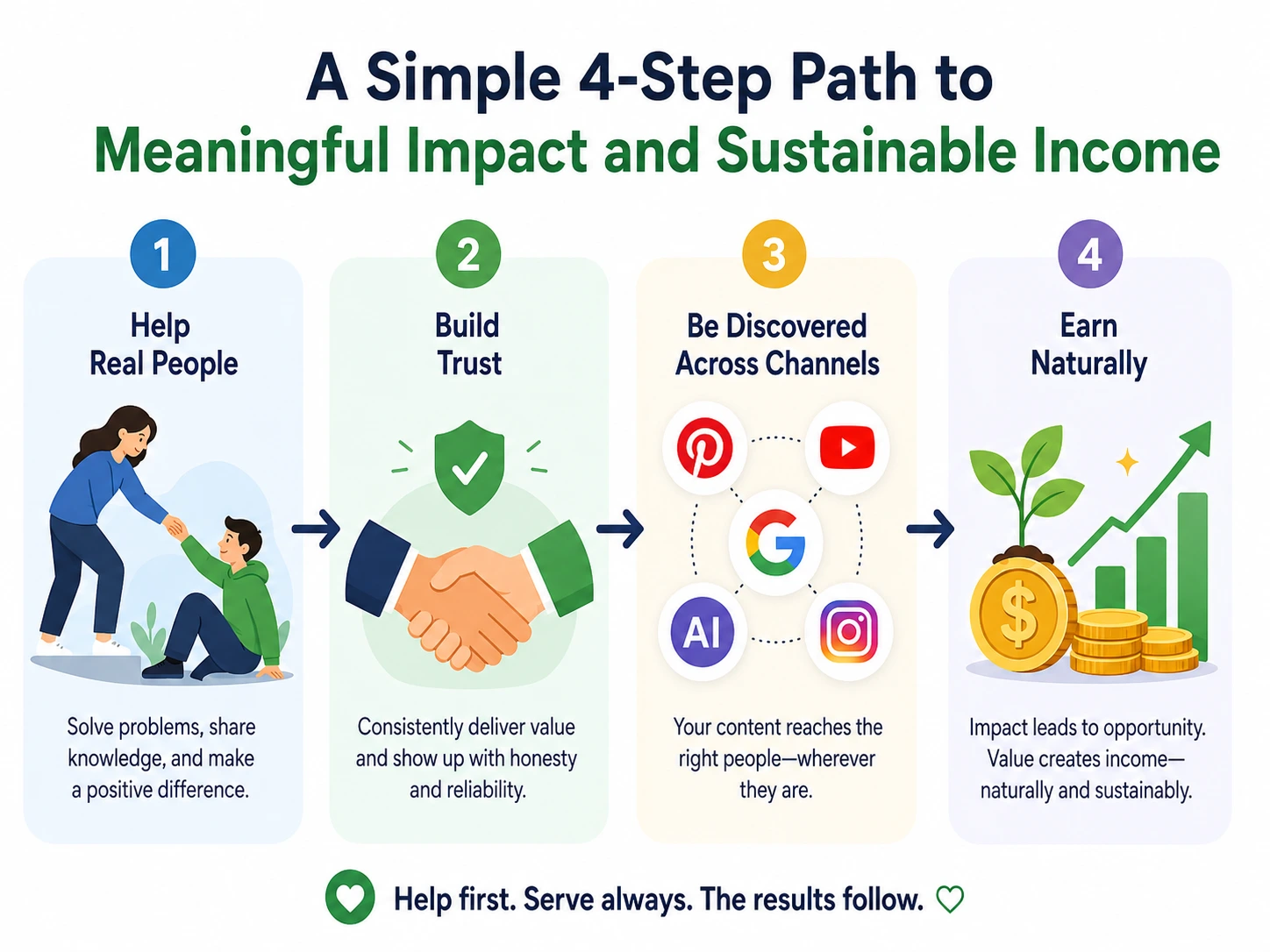
The tools have changed.
The discovery routes have changed.
The old model has been squeezed.
But the core idea has not changed at all:
Help people first. Build trust. Then recommend useful next steps where they genuinely fit.