I saw an advert recently showing someone rubbing over a scratch on a car.
It was one of those simple visual adverts that makes the job look almost effortless.
Rub here.
Scratch gone.
Problem solved.
So I wondered what someone would see if they searched Google for something like:
“How do I repair a scratch on my car?”
The answer was interesting.
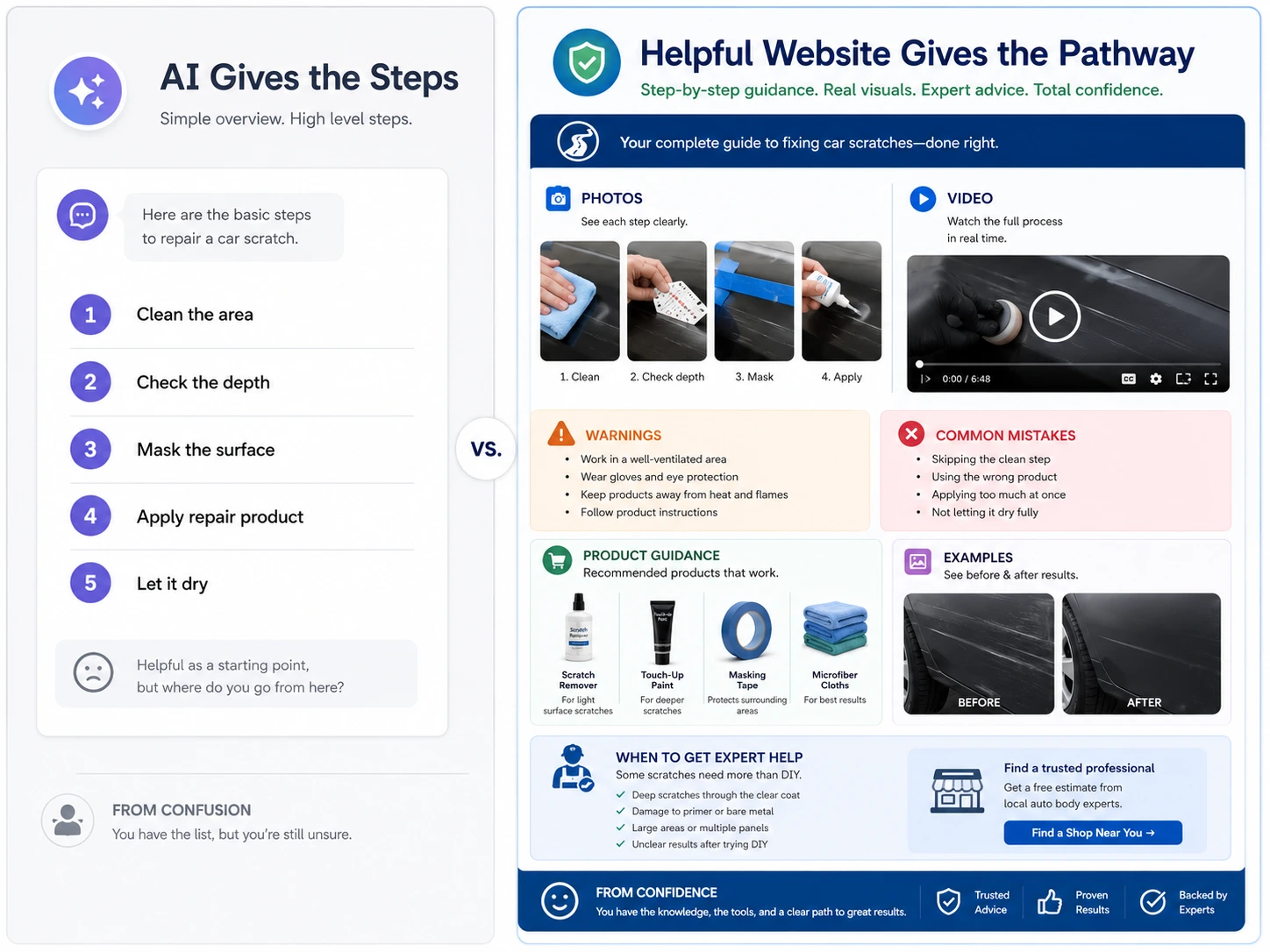
Google’s AI Overview gave a sensible step-by-step response. It explained that you first need to work out how deep the scratch is. It mentioned the fingernail test. It explained the difference between a light clear coat scratch and a deeper scratch that may need touch-up paint, primer or clear coat.
It also referenced sources beside different steps, including familiar names such as Halfords and YouTube.
So the AI answer was not useless.
Far from it.
It was actually a decent starting point.
But it also showed me something important about the future of websites.
AI can give you the steps.
But a really helpful website can show you the job.
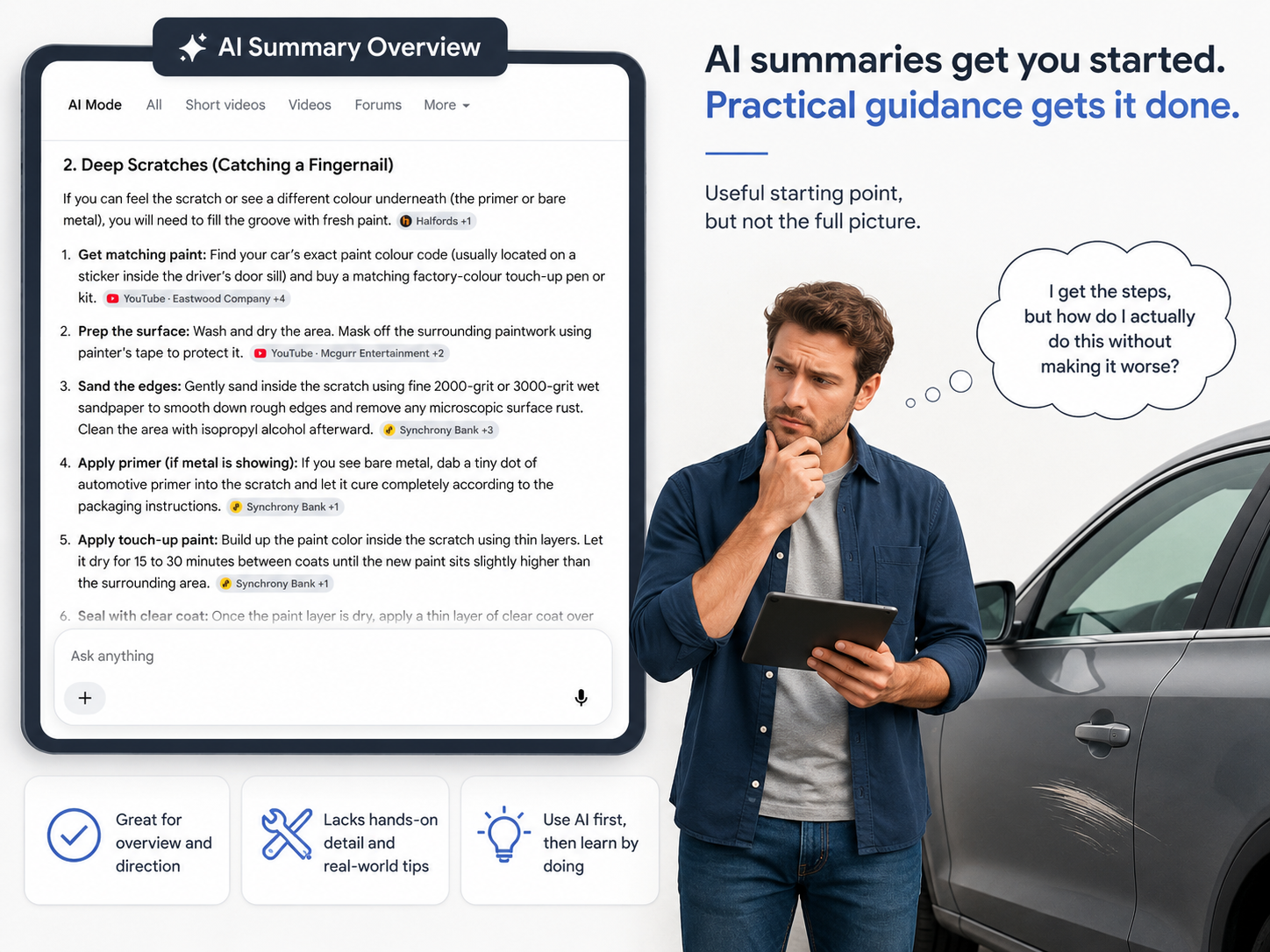
A Summary Is Not the Same as Confidence
This is the key point.
A summary can tell you what to do.
But it does not always give you the confidence to do it.
For example, one of the steps in the AI answer was something like:
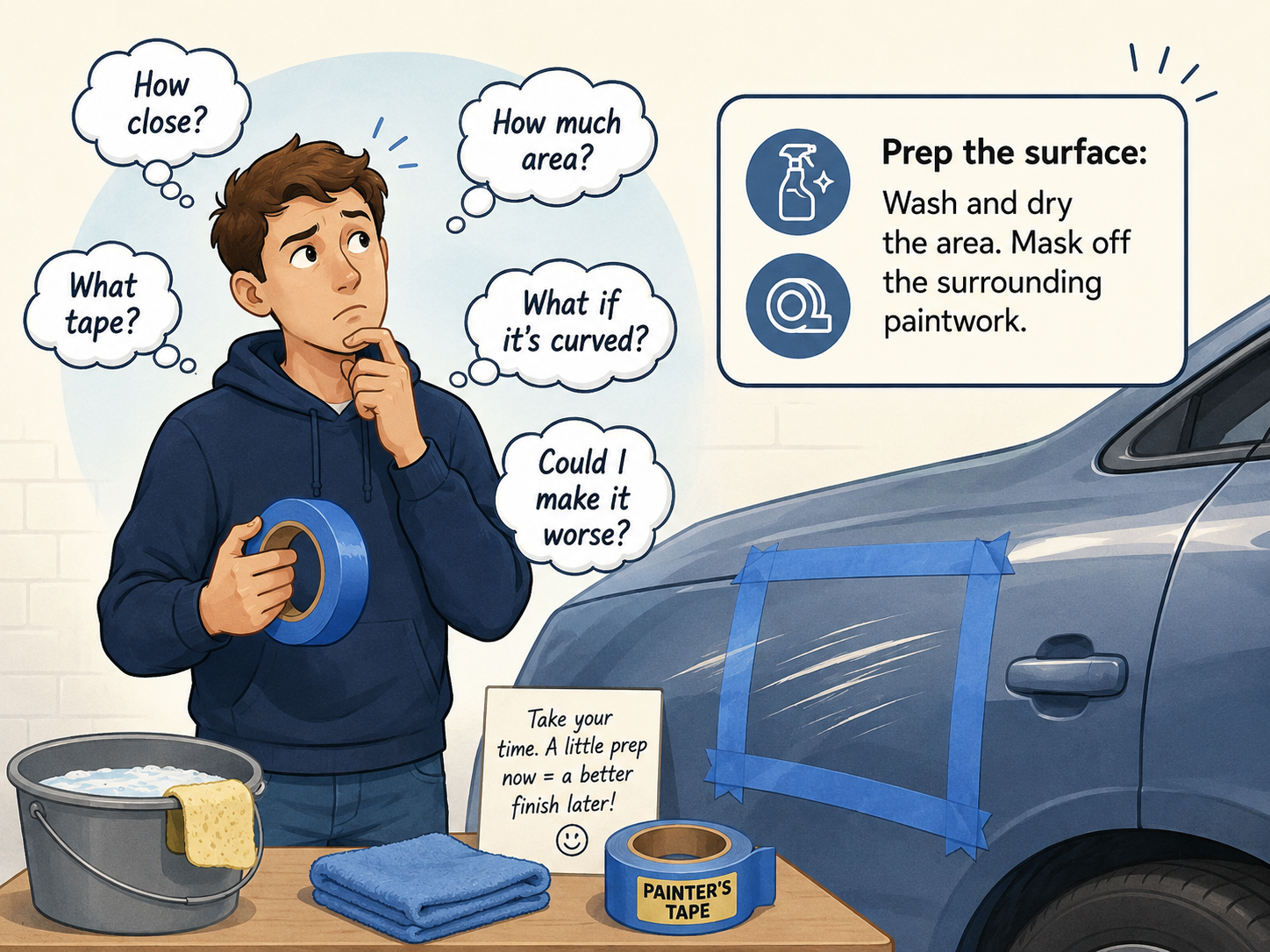
Prep the surface: wash and dry the area. Mask off the surrounding paintwork using painter’s tape.
That sounds simple enough.
But if you have never done it before, a lot of questions appear immediately.
What kind of tape?
How close to the scratch?
How much of the surrounding paintwork should you cover?
What if the scratch is on a curved bumper?
What if the tape lifts something?
What if sanding makes the damage worse?
And the biggest question of all:
Should I actually be doing this myself?
That is where a helpful website has an opportunity.
Not by repeating the AI answer.
By going deeper than the AI answer.
This Is the Gap Helpful Websites Can Fill
The old style of website content often tried to answer simple questions.
What is this?
How do I do that?
Which product is best?
But AI is now very good at giving basic answers to those types of questions.
So if a website only says what AI has already said, why would anyone need to click?
That is the challenge.
But it is also the opportunity.
Because many real-world problems do not end with knowing the steps.
They need context.
They need judgement.
They need warnings.
They need visuals.
They need examples of what good and bad look like.
They need someone to say:
“This bit is easy.”
“This bit is where beginners often make a mess.”
“This is when I would stop and call a professional.”
That is much more useful than a checklist.
The Better Website Page
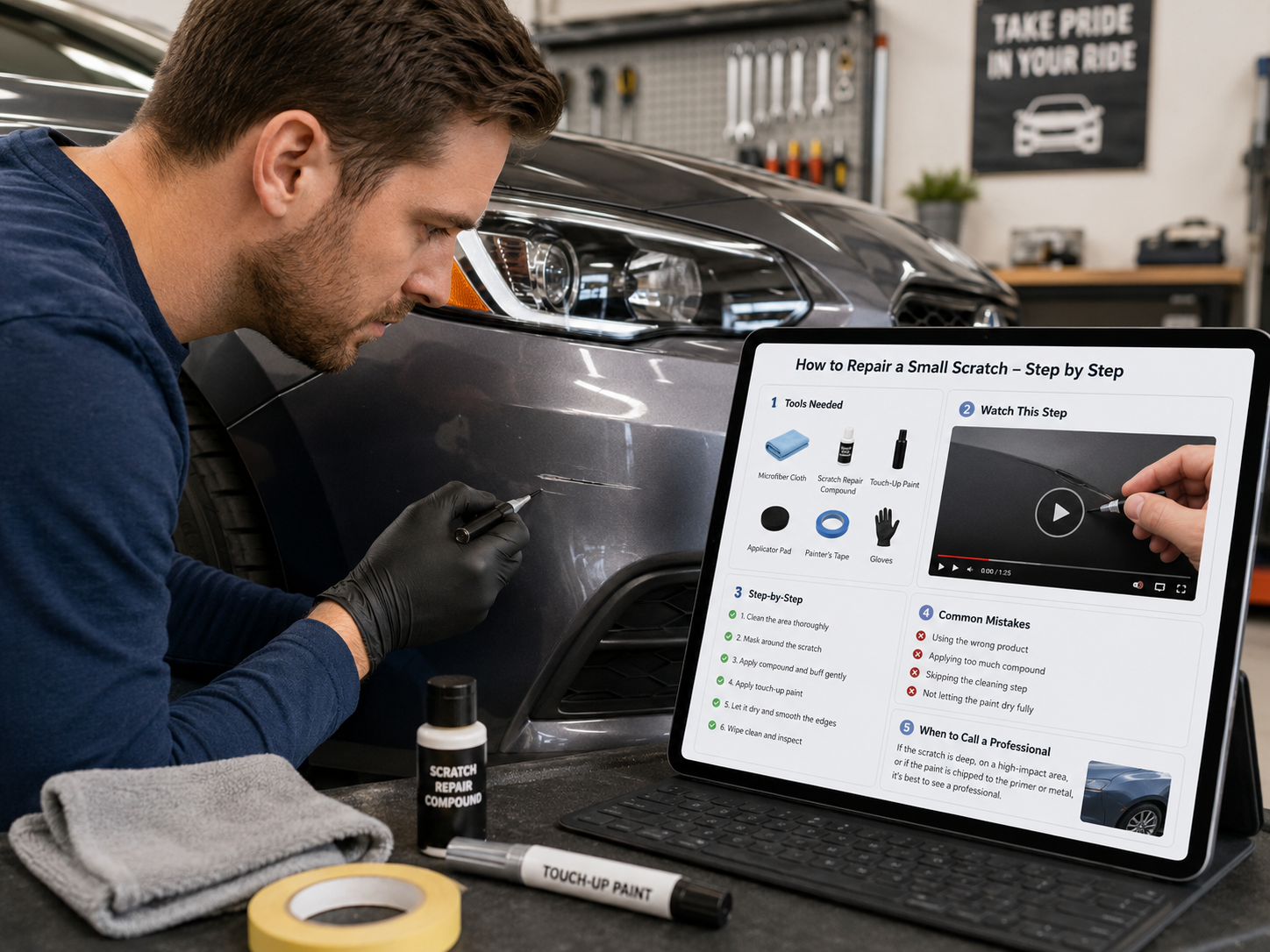
Imagine a proper helpful guide on repairing a car scratch.
It could start with the same basic idea as the AI answer, but then add the things a real person needs.
It could show close-up photos of different scratch types.
It could explain the fingernail test with images.
It could show what a clear coat scratch looks like compared with a scratch through to primer or bare metal.
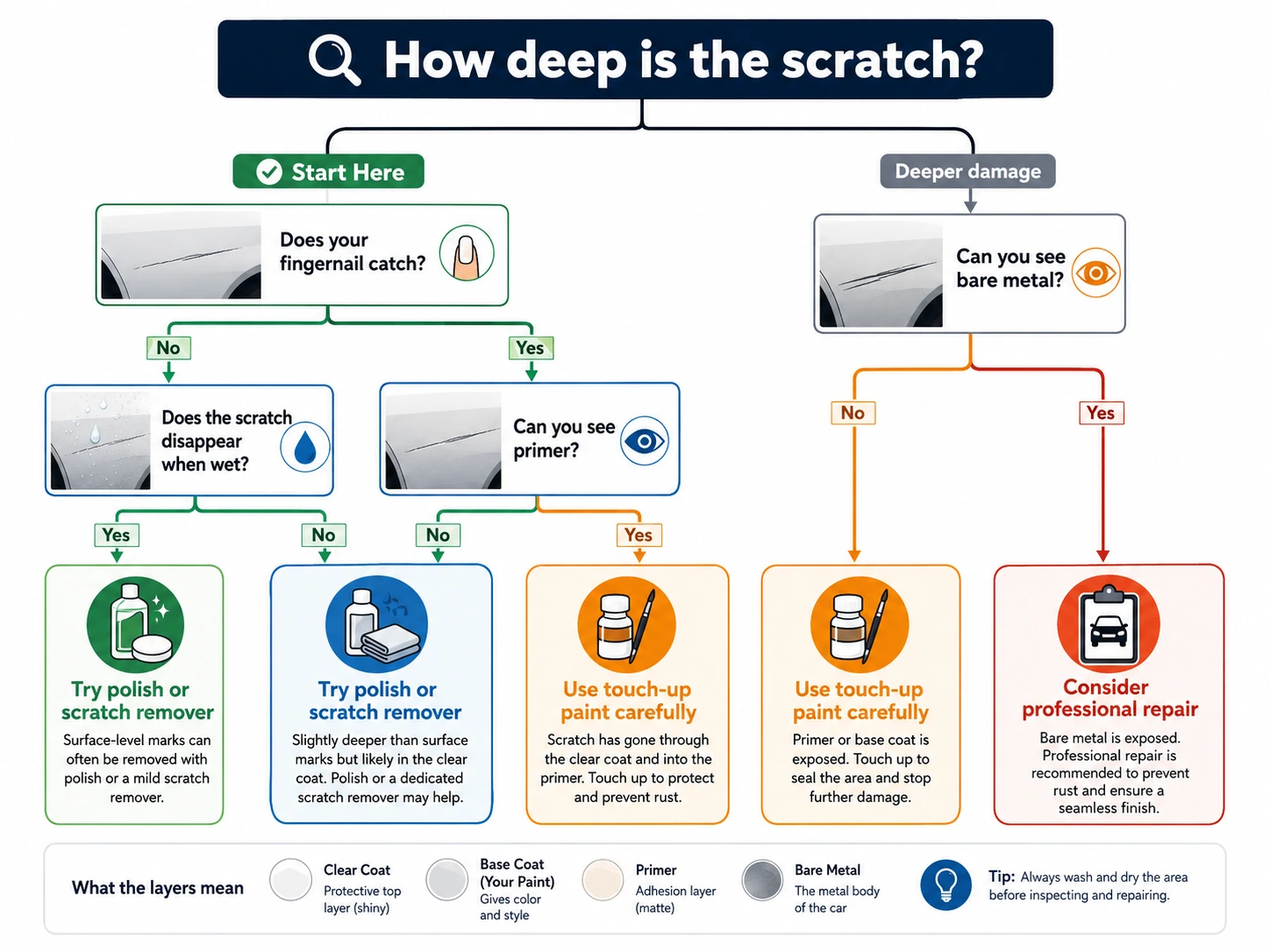
It could include a simple decision chart:
Can you feel the scratch?
Does it disappear when wet?
Can you see primer?
Can you see metal?
Is the scratch large, deep or on a complicated area?
Then it could explain the safest next step.
That is already more helpful than a basic answer.
A Helpful Website Can Show the Reality of the Job
There is also a big difference between reading a step and seeing it done.
“Apply scratch remover.”
That sounds easy.
But how much?
How hard should you rub?
How long should you work the compound?
What should it look like when it starts to improve?
When should you stop?
The same applies to sanding, applying primer, using touch-up paint and adding clear coat.
These are not just pieces of information.
They are practical actions.
And practical actions often need visual guidance.
This is where a helpful website can combine written explanation, step-by-step photos, short videos, product examples and warnings.
Not just:
“Here are the steps.”
But:
“Here is what this step looks like.”
This Is Not Really About Car Scratches
The car scratch example is just one example.
The same idea applies everywhere.
A person trying to buy their first telescope does not just need a definition of aperture.
They need to understand what sort of telescope will actually help them see the Moon and planets.
A person getting into birdwatching does not just need a list of binoculars.
They need to understand magnification, weight, field of view, comfort, and what suits their actual situation.
A person starting a garden project does not just need a list of materials.
They need to see the steps, understand the mistakes, and know what the finished result should look like.
A person building a website does not just need to know that WordPress exists.
They need to understand niches, content, trust, traffic, structure and how recommendations fit naturally.
AI can often give the first answer.
But a helpful website can build the full pathway.
The Opportunity Is the Page After the AI Answer
This is the point I keep coming back to.
The opportunity is not to compete with AI by writing the same basic answer again.
That is not enough.
The opportunity is to create the page someone still needs after reading the AI answer.
The AI answer may tell them the broad process.
Your website can help them understand whether the process is right for them.
Your website can show what the steps look like.
Your website can explain what can go wrong.
Your website can recommend tools or products in context.
Your website can help them avoid mistakes.
Your website can give them confidence.
That is a much stronger role than simply answering a basic search query.
This Changes How We Should Think About Content
In the old model, a lot of website owners thought mainly about keywords.
Find a question.
Write an article.
Try to rank.
Get traffic.
That model is being squeezed.
The better model is to think about the real person behind the search.
What are they trying to do?
What are they worried about?
Where could they go wrong?
What would they need to see?
What would make them trust the advice?
What would help them decide whether to do it themselves or get expert help?
Those questions create better content.
They also create better websites.

Helpful Websites Still Have a Future
AI has changed the internet.
There is no point pretending otherwise.
Simple answers are easier to get than ever before. Some searchers will not click through to websites for basic information.
But that does not mean websites are finished.
It means websites need to become more useful.
More visual.
More practical.
More trustworthy.
More human.
A helpful niche website should not just give an answer.
It should help the visitor understand the answer, apply it, avoid mistakes, and make a better decision.
That is where the opportunity still exists.
AI can give the instruction.
A helpful website can give the instruction, the context, the warning, the visual, the confidence and the judgement.
And for many real-world problems, that is what people still need.