
Would you like to build a useful website around a hobby, interest, skill or subject you genuinely care about?
That is what Action With AI is here to help you do.
Hi, I’m John. I have been learning about WordPress and building websites since joining Wealthy Affiliate in 2015.
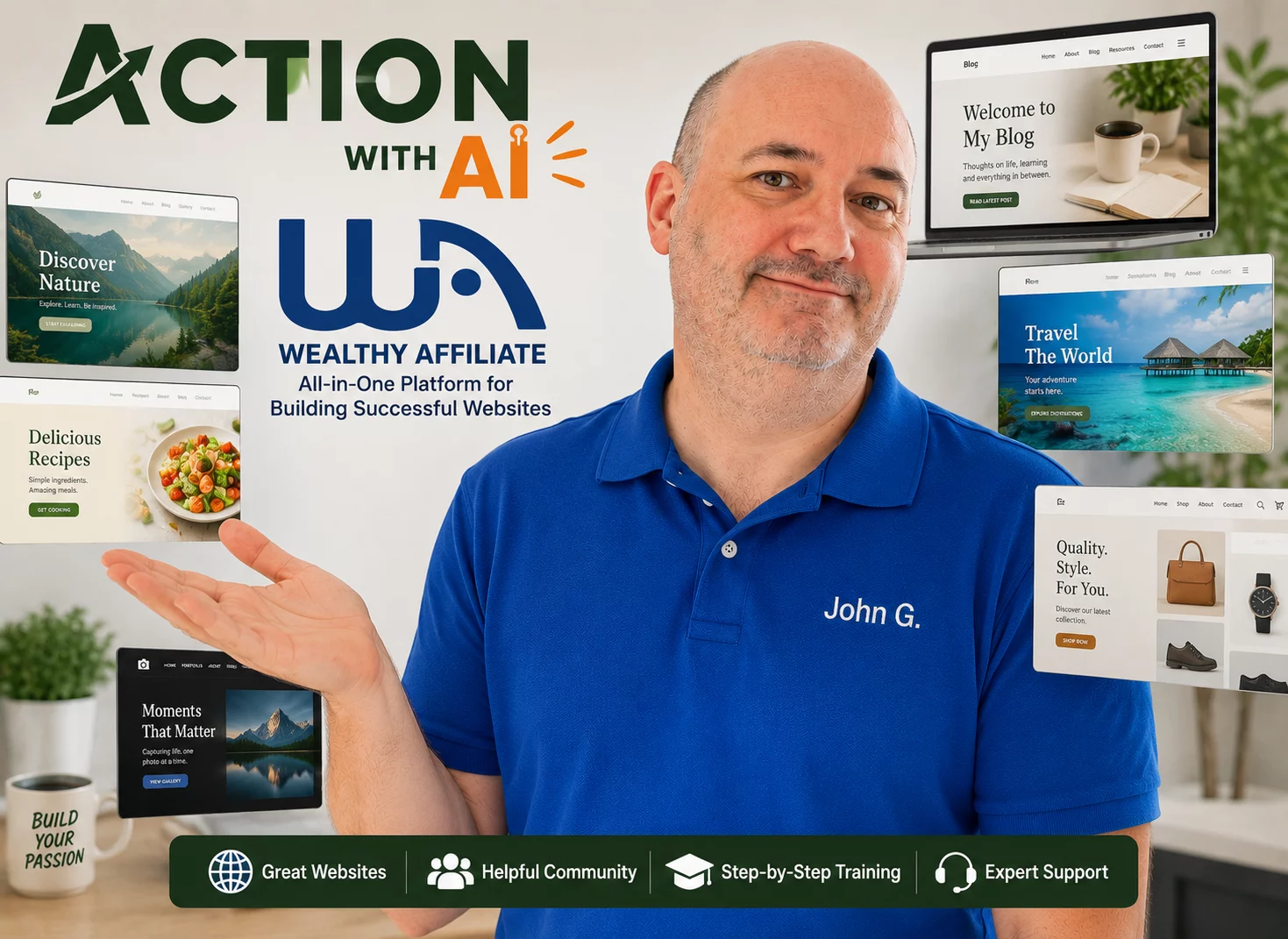
I would not claim that websites transformed my life or produced instant income. Building them has involved learning, experimenting, making mistakes and sometimes repairing things that I broke.
What has changed significantly is the development of AI.
AI can help an ordinary person research a subject, organise ideas, question assumptions, create content plans, improve drafts, analyse an existing website and even develop simple tools. Tasks that once required much more time or technical knowledge have become far more accessible.
AI does not remove the need for human experience, evidence or judgement. It makes it possible for one person to do more with them.
What is a hobby website?
A hobby website is an independent website built around a subject you enjoy, understand or want to explore more deeply.
It might cover gardening, baking, astronomy, chess, fishing, crafts, photography, fitness, model railways, classic cars, pets, music or almost any other subject with enough possibilities to keep learning and creating.
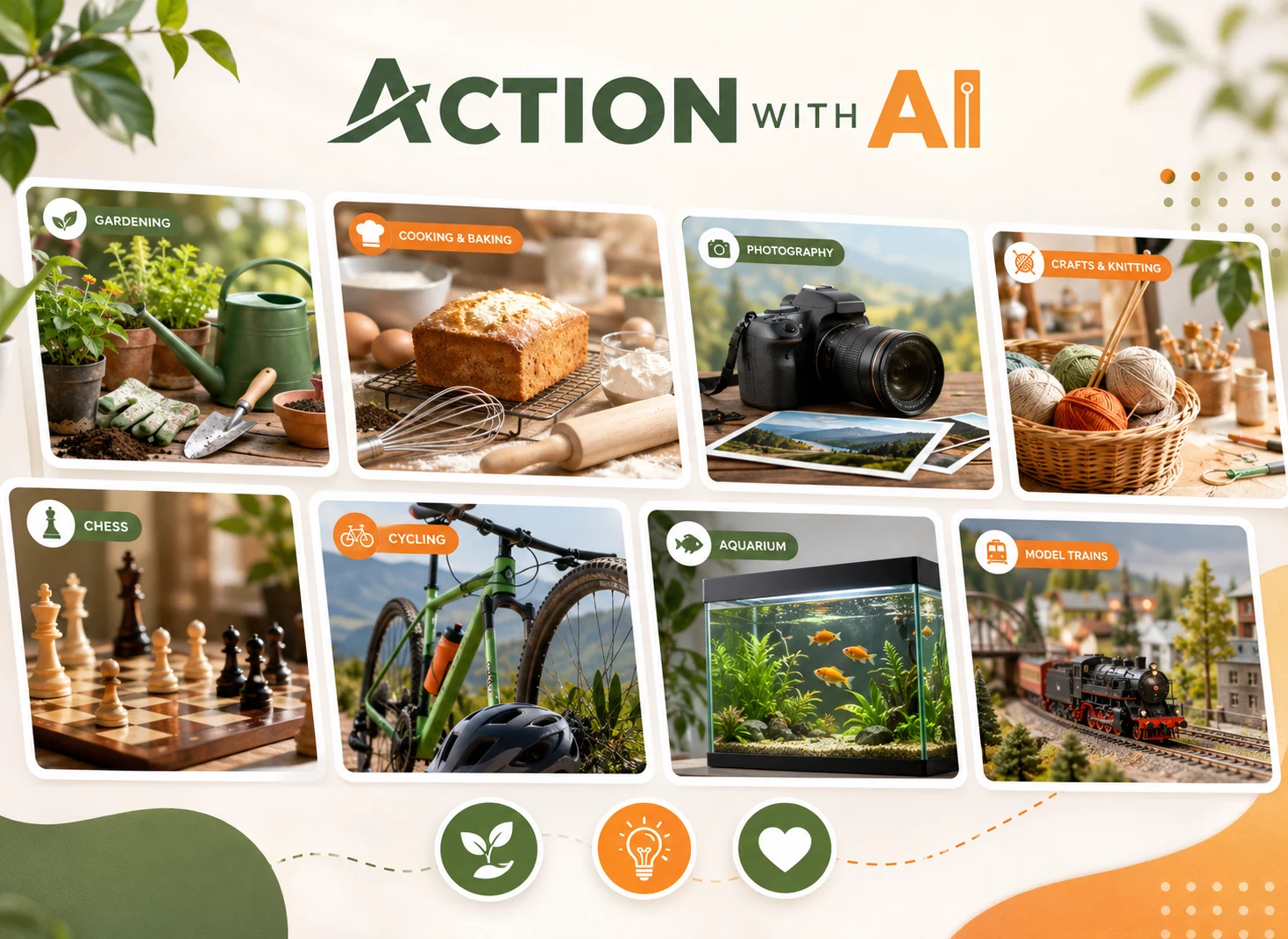
However, a helpful hobby website is more than an online diary.
It uses your knowledge, research, experiments, photographs, mistakes and discoveries to help other people understand something, make a decision or solve a problem.
That might mean helping someone choose their first telescope, understand a chess opening, repair a model railway layout or avoid buying the wrong gardening equipment.
Your interest gives you a reason to keep exploring the subject. Helping other people gives the website a reason to exist.
Who is Action With AI for?
This site is for beginners and part-time website builders who want to create something useful around their knowledge or interests.
You do not need to begin as a programmer, web designer or technical expert. You do need to be willing to learn WordPress, follow instructions, ask questions and solve manageable problems as they arise.
You might work on the site during spare evenings, at weekends or whenever your circumstances allow. There is no required publication schedule and no prize for producing articles faster than you can research them properly.
Some posts may be completed in one session. Others may require screenshots, practical tests, research or information from another person or organisation.
The aim is to create useful work you are prepared to put your name to—not to fill a website as quickly as possible.
A hobby website is not a quick-money scheme
If your main aim is to earn a large amount of money quickly, a hobby website is unlikely to meet that expectation.
It takes time to learn how the website works, research and publish useful material, become visible, attract visitors and earn their trust. Your early articles may not be as good as the ones you produce after gaining more experience. That is part of the learning process.
Many people start websites and give up. Some discover that they do not enjoy researching and producing content. Others underestimate how long it takes to build useful coverage or attract an audience.
A hobby website can eventually create earning opportunities through affiliate recommendations, advertising, digital products, tools or services. However, help should come before monetisation.
When a recommendation genuinely helps the reader take the next step, earning a commission can fit naturally into the content. Income is possible, but it is neither immediate nor guaranteed.
How AI fits into the process
I use ChatGPT extensively when developing Action With AI, but I do not normally ask it to produce a finished article from a one-line instruction.
I treat the process more like an interview.
We begin with the proposed subject. I explain my experience, opinions and understanding of the situation. ChatGPT helps organise those thoughts, asks questions and identifies claims that need stronger evidence.
That may lead to further research, a practical experiment or a question for somebody with direct knowledge. When we wrote about WordPress backups, for example, the discussion revealed that I did not know exactly what my hosting platform backed up. I contacted its support team and used the response as evidence in the article.
Once the important facts and ideas have been established, we prepare a detailed content brief and evidence plan. The article is drafted, reviewed and improved before screenshots, images and internal links are added.
AI helps with the work, but the human remains responsible for the purpose, evidence, judgement and final result.
The five stages of building a helpful hobby website
Action With AI follows five connected stages. Each one represents a different part of the reader’s journey from an initial idea to a useful website with the potential to earn.
1. Choose Your Hobby
The first stage is deciding what the website will cover.
This is not simply about choosing something profitable. You need a subject you genuinely want to keep exploring, an audience you can help and enough scope to produce useful content without making the idea impossibly broad.
Choose Your Hobby: Find a Website Topic With Room to Grow
2. Build Your Website
Once you have a workable subject, you need somewhere to publish.
This section takes you through domains, hosting, costs, WordPress installation, settings, themes, plugins, backups, essential pages, website structure and a sustainable publishing workflow.
Build Your Website: A Beginner’s Guide to Getting a Hobby Website Online
3. Create Helpful Content
A working WordPress site is only the container. Its real value comes from the information you put inside it.
This section looks at research, first-hand experience, evidence, images, experiments and ways to create content that contributes something useful rather than repeating generic information already available elsewhere.
4. Find Your Audience
Even an excellent article needs a route to the people it was written for.
This section explores how readers may discover a website through search, Pinterest and other relevant channels. It also considers how search queries, reader discussions and AI-generated answers can reveal unanswered questions and new content opportunities.
5. Earn From Your Site
Once a website provides useful information and begins developing an audience, appropriate earning methods can start to fit naturally.
This section considers affiliate marketing and other realistic ways a hobby website may earn, while keeping useful content and reader trust at the centre of the process.
This website is being built using the process it teaches
Action With AI is itself an evolving hobby website.
I initially wrote about AI subjects that interested me without having a complete plan for the reader’s journey. I later narrowed the purpose of the site and used ChatGPT to analyse the existing posts, organise their subjects and identify what was missing.
I am now working through that plan one hub at a time. The Build Your Website section has been developed into a complete beginner’s journey, while other areas will continue to expand as their supporting posts are researched and published.
This means you are not only reading a theory about building a website. You can see the process being applied here: planning the structure, identifying gaps, producing supporting articles, completing each hub and then reviewing how everything connects.
The site will continue to develop, but completed articles are published as soon as they are useful. There is no need to hide an evolving website behind a site-wide “under construction” screen.
What does it cost to get started?
Everything published on Action With AI is free to read.
Running your own website normally involves paying for a domain name and hosting. The amount depends on whether you choose inexpensive separate services or a more comprehensive platform containing training, tools and support.
You do not need every premium theme, plugin or AI tool. A beginner can keep the setup relatively simple and add optional services only when a real need develops.
See the dated comparison in How Much Does It Really Cost to Start a Hobby Website?
Where should you begin?
Choose the point that best describes your current situation:
- You have not chosen a clear subject: begin with Choose Your Hobby.
- You have a subject but no website: follow the Build Your Website guide.
- Your website is online but needs useful articles: continue to Create Helpful Content.
- You already have useful content: explore how to Find Your Audience.
- Your site has developed an audience and trust: consider the options in Earn From Your Site.
You do not need to understand every stage before taking the first step.
Choose something you care about. Build a manageable website. Create genuinely useful content. Learn how the right people might find it. Consider earning only where it fits naturally.
AI can make every stage more accessible, but the website still needs your experience, curiosity, judgement and willingness to keep going.
It will take time. You will make mistakes and learn new skills. Some articles will work better than others, and parts of the website will need improving as your understanding develops.
That is not a reason to wait. It is how useful websites are built.