How to Start a Birdwatching Hobby Website
Birdwatching is one of those hobbies that naturally lends itself to a helpful website.
It is visual. It is relaxing. It is full of questions. It has beginner-friendly topics, practical problems, seasonal interest, useful products, and lots of people who want to learn more.
Some people want to attract more birds to their garden. Some want to identify the birds they see on walks. Some are trying to choose their first pair of binoculars. Others are interested in bird photography, bird feeders, nest boxes, nature reserves, or seasonal migration.
That means there are countless opportunities to create useful content around birdwatching.
And today, with AI tools available to help with article ideas, outlines, drafts, images, planning and research, it has never been easier to start turning a hobby you enjoy into a structured website project.
This page gives you a beginner-friendly overview of how a birdwatching hobby website could work, what you could write about, how AI can help, where WordPress fits in, and how a platform like Wealthy Affiliate can help you learn the wider website-building process.
The Big Idea: Share What You Love and Help Other People
A birdwatching website does not need to begin with complicated technology or a perfect business plan.
It can begin with a simple idea:
You enjoy birdwatching, and other people have birdwatching questions you could help answer.
That is the foundation of a useful hobby website.
For example, someone might ask:
- Why are birds visiting my garden but ignoring my feeders?
- What binoculars should a beginner buy?
- How do I identify common garden birds?
- What should I feed robins?
- Where should I go birdwatching near me?
- How do I photograph birds without scaring them?
- What birds can I see in winter?
Each one of those questions could become a helpful article.
Over time, many helpful articles can become a useful birdwatching website.
That is the key mindset. You are not trying to create a “money site” full of random product links. You are building a helpful resource around a hobby you enjoy.
The website comes first. The helpful content comes first. Any income opportunity comes later, and only if your recommendations genuinely help the reader.
Why Birdwatching Is a Strong Hobby Website Topic
Birdwatching works well as a website topic because it has both emotional appeal and practical depth.
People do not just search for birdwatching information because they are bored. They often have a specific situation they want help with.
They may have seen a bird they cannot identify. They may have bought a feeder that birds ignore. They may want to buy binoculars but feel confused by the options. They may want to create a more wildlife-friendly garden. They may want to get outside more and enjoy nature.
That gives you a lot to work with.
#1 Birdwatching Has Beginner Questions
Many people are interested in birds but do not know where to start.
A beginner may not know the difference between common birds, which feeder to use, what food to buy, whether they need expensive binoculars, or how to identify birds by sound.
Beginner questions make excellent website content because they need clear, friendly explanations.
#2 Birdwatching Has Practical Problems
Some hobbies are quite abstract, but birdwatching has lots of practical problems.
For example:
- Birds are not using the feeder.
- Squirrels keep stealing food.
- Larger birds dominate the feeding area.
- The garden does not attract many birds.
- The beginner cannot identify what they saw.
- Photos are coming out blurry.
- Binocular choices are confusing.
Practical problems are ideal for helpful articles because the reader is looking for a solution.
#3 Birdwatching Has Natural Product Links
Birdwatching also connects naturally with useful products.
That might include feeders, bird food, bird baths, nest boxes, binoculars, field guides, cameras, lenses, walking gear, notebooks, apps, or books.
But the product should never be the starting point.
The reader’s problem should be the starting point.
For example, if someone asks why robins are not using a hanging feeder, the answer may involve explaining that robins often prefer lower feeding areas or trays. A product recommendation can then fit naturally because it helps solve the actual problem.
That is a much better approach than simply writing “Best Bird Feeders” and filling the page with links.
7-Step Birdwatching Hobby Website Mini Guide
Step 1: Choose a Birdwatching Angle
One of the first things to understand is that “birdwatching” is a very broad topic.
If you try to build a website about everything in birdwatching, it may feel overwhelming. A better approach is to start with a smaller angle.
That does not mean your website can never grow. It simply means you begin with a clear focus.
Possible Birdwatching Website Angles
Here are some examples of birdwatching sub-topics that could become focused website ideas:
- Garden birdwatching: feeders, bird baths, nest boxes, garden setup, attracting birds.
- Beginner birdwatching: how to start, what to look for, simple equipment, first bird lists.
- Bird identification: common birds, bird calls, seasonal visitors, lookalike species.
- Birdwatching gear: binoculars, scopes, field guides, bags, clothing, accessories.
- Bird photography: cameras, lenses, garden photography setups, hides, beginner techniques.
- Birdwatching walks and trips: local routes, nature reserves, coastal birding, checklists.
- Seasonal birdwatching: spring nesting, autumn migration, winter feeding, yearly bird calendars.
Each of these could be narrowed further.
For example, “garden birdwatching” could become:
- garden bird feeders for beginners;
- how to attract birds to small gardens;
- feeding robins, blackbirds, blue tits and great tits;
- wildlife-friendly gardens;
- bird feeding through the seasons.
The more specific you become, the easier it is to understand who you are helping and what content to create.
Example
Too broad: Birdwatching
More focused: Garden birdwatching for beginners
Even more specific: Helping beginners attract birds to their garden feeders
Step 2: Find Real Questions People Are Asking
Once you have a birdwatching angle, the next step is finding real questions.
This is important because beginners often make the mistake of asking:
“What do I want to write about?”
A better question is:
“What are people already trying to find help with?”
That small change makes your content much more useful.
Where Can You Find Birdwatching Questions?
You can find birdwatching questions in lots of places:
- Reddit communities;
- Google search suggestions;
- People Also Ask results;
- Pinterest search suggestions;
- YouTube comments;
- Facebook groups;
- birdwatching forums;
- product reviews;
- your own experience;
- questions from friends, family, or local groups.
Reddit can be especially useful because people often explain their situation in detail.
For example, someone might not simply ask:
“Best bird feeder?”
They might say:
“Birds come into my garden, but they never go near my feeders. I see robins, blue tits, great tits and blackbirds. What should I do?”
That is a much richer content idea.
It tells you the person has a real problem, a specific situation, and a clear need for guidance.
Turning a Question Into an Article
That one question could become an article such as:
- Why Birds Aren’t Using Your Feeders — And How to Fix It
- Birds in the Garden But Not on the Feeders? Try These Beginner Fixes
- How to Attract Robins, Tits and Blackbirds to Your Feeders
- Best Beginner Bird Feeder Setup for a Small Garden
This is how a hobby website starts to become genuinely useful.
You are not guessing. You are responding to real questions.
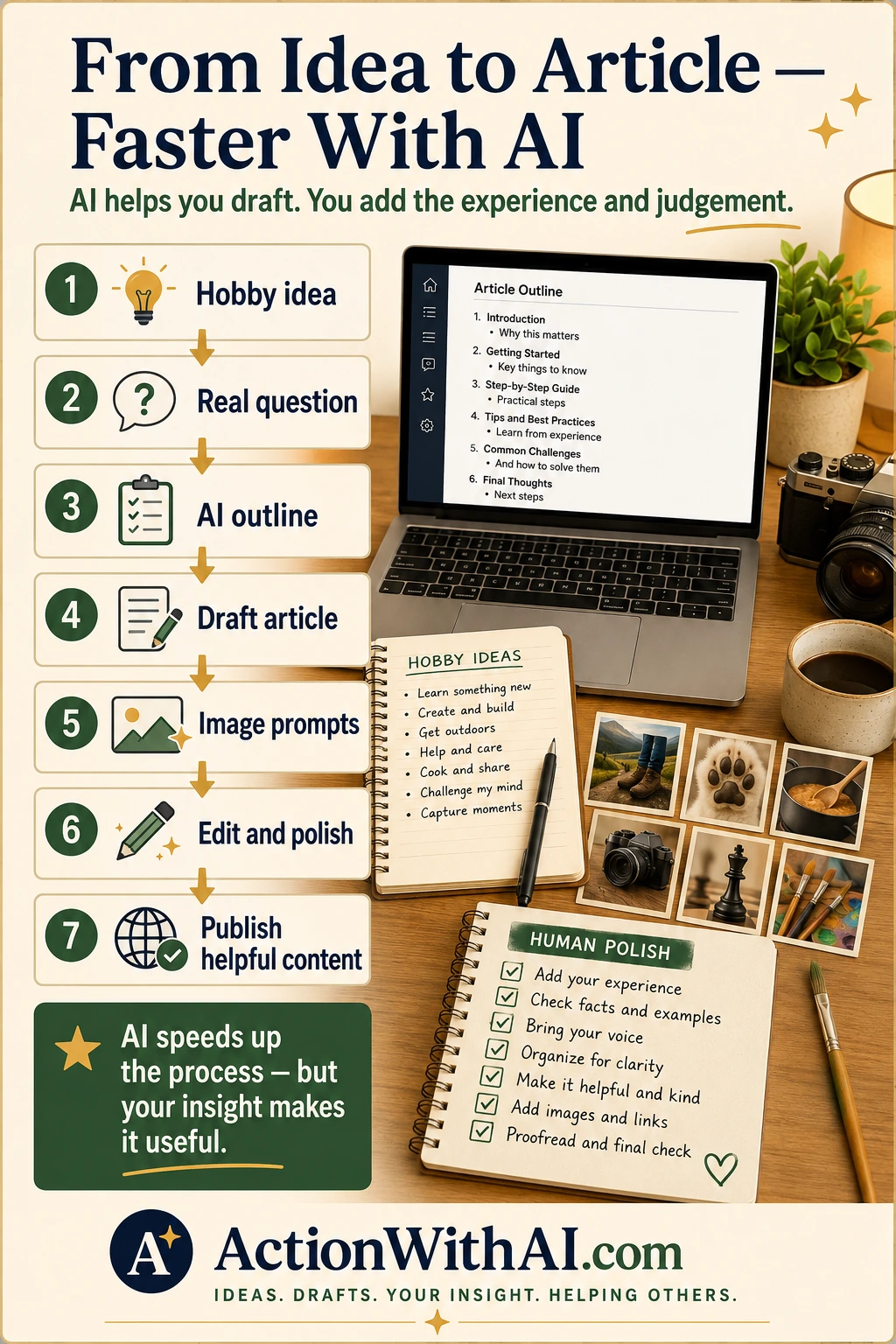
Step 3: Use AI to Turn Questions Into Article Plans
This is where AI tools can make a huge difference.
In the past, you might find a good question and still feel stuck. You might wonder how to structure the article, what sections to include, what images you need, or how to turn a rough idea into a full post.
AI can help you move from idea to structure very quickly.
For example, you could give an AI tool this prompt:
Example AI prompt:
I want to write a helpful birdwatching article answering this beginner question: “Birds visit my garden, but they ignore my feeders. What should I do?” Please create a detailed article outline. Include feeder placement, food choice, bird safety, different bird species, patience, cleaning, water, and useful products that could naturally be recommended.
In seconds, AI can help you create an outline with sections such as:
- why this problem is common;
- quick fixes to try first;
- why feeder placement matters;
- which foods different birds prefer;
- why feeder design matters;
- how to make the garden feel safer;
- how long birds may take to trust a new feeder;
- how to keep feeders clean;
- which products might genuinely help;
- what to do next.
That does not mean the article is finished. It means you now have a strong starting point.
AI can help you draft faster, but your own judgement still matters.
Where Your Own Experience Comes In
The best articles do not feel like generic AI text.
They include real judgement, examples, observations, and practical detail.
For example, AI might write:
“Place feeders near cover.”
You could improve that by adding:
“In a small suburban garden, a feeder near a hedge or shrub can help smaller birds feel safer, but avoid placing it directly beside a fence or dense low cover where cats could hide.”
That kind of detail is what makes content helpful.
AI helps you move faster. Your experience and editing make the article worth reading.
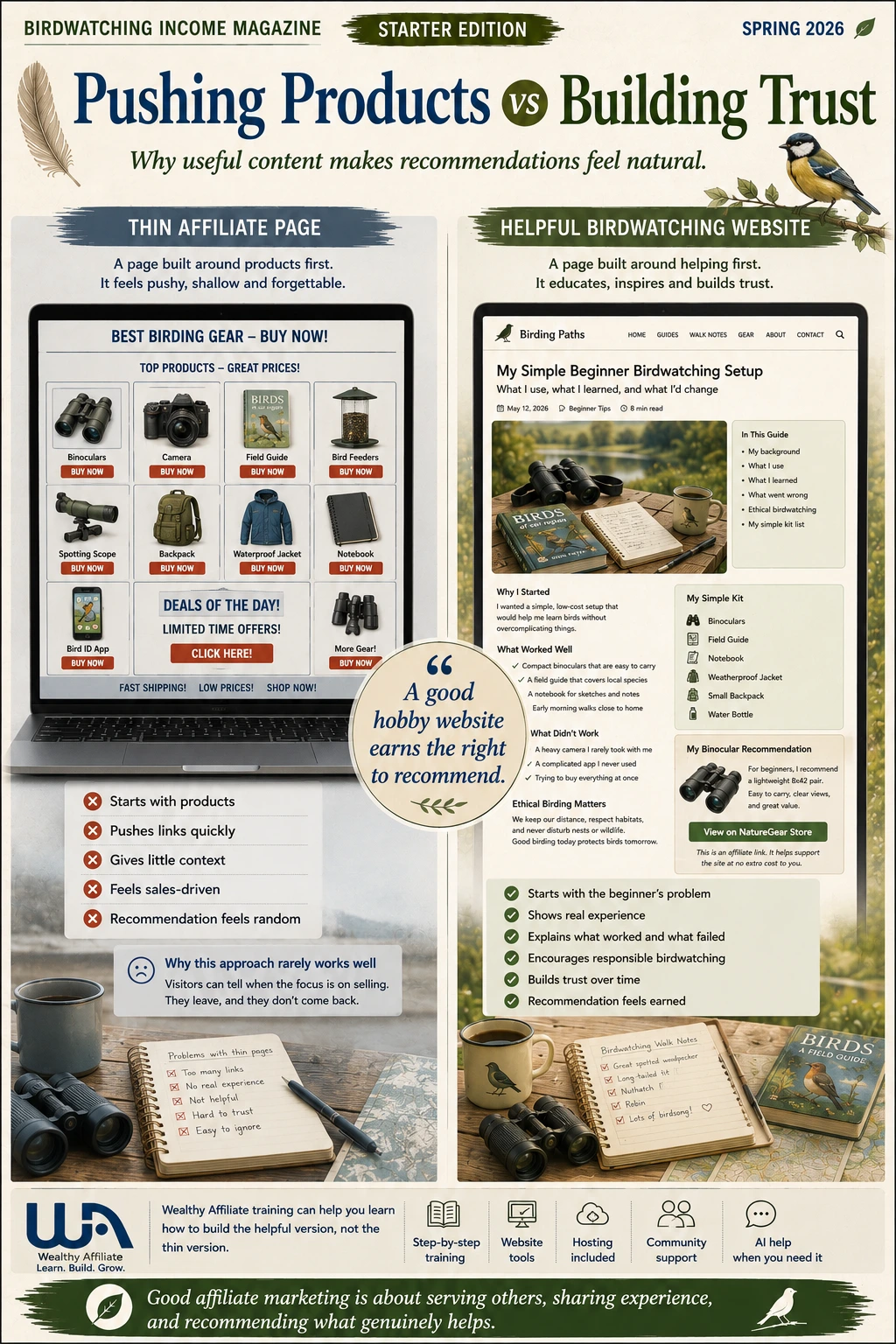
Step 4: Create Helpful Articles, Not Thin Pages
This is one of the most important points.
A good hobby website is not built by creating thin pages that exist only to send people to products.
A helpful birdwatching website should genuinely answer questions.
For example, a thin page might say:
“Here are the best bird feeders. Click here to buy.”
A helpful article would explain:
- why birds may ignore feeders;
- how feeder placement affects behaviour;
- which birds prefer hanging feeders;
- which birds prefer ground feeding;
- why water and cover matter;
- how to keep feeders clean;
- which feeder types suit different situations;
- what a beginner should try first.
Only after that does a product recommendation make sense.
That is the difference between a sales page and a helpful website.
Helpful Website Principle
Answer the question first. Build trust first. Recommend only when the recommendation genuinely helps.
Step 5: Publish Your Content on WordPress
Once you have article ideas, outlines, drafts and images, you need somewhere to publish them.
For many hobby websites, that place is WordPress.
WordPress is a website-building system that lets you create pages, publish blog posts, add images, organise categories, build menus and manage your site without coding every page from scratch.
A birdwatching website built with WordPress might have categories such as:
- Garden Birds
- Bird Feeders
- Bird Identification
- Birdwatching Gear
- Bird Photography
- Birdwatching Walks
- Seasonal Birdwatching
This helps visitors find related articles.
For example, if someone reads an article about why birds are not using their feeders, they may also be interested in:
- best bird feeders for small gardens;
- what food robins like;
- where to place a bird bath;
- how to clean bird feeders safely;
- how to attract blue tits to your garden.
That is how one article can become part of a larger website.
Why WordPress Can Feel Confusing at First
If you are completely new to websites, WordPress may feel unfamiliar at first.
You may wonder about hosting, domains, themes, menus, plugins, posts, pages and settings.
That is normal.
This is one reason I like structured training. You do not need to know everything before you begin. You need a clear path that helps you take the next step without getting overwhelmed.
Step 6: Create Images and Pinterest Pins
Birdwatching is a very visual topic, so images can help your website enormously.
You might use images to show:
- different feeder types;
- good and bad feeder placement;
- common garden birds;
- birdwatching gear;
- seasonal bird guides;
- article checklists;
- Pinterest pins that link back to your articles.
AI image tools can help you create useful graphics quickly.
For example, from one article about birds ignoring feeders, you could create Pinterest pins such as:
- Why Birds Aren’t Using Your Feeders
- 7 Beginner Fixes for Garden Bird Feeders
- Where Should You Put a Bird Feeder?
- Best Feeder Setup for Robins, Tits and Blackbirds
- Birds in the Garden But Not on the Feeders?
Each pin can lead back to the helpful article.
This matters because your article is the deeper answer, while the pin is the visual hook.
Step 7: Understand How Affiliate Recommendations Can Fit Naturally
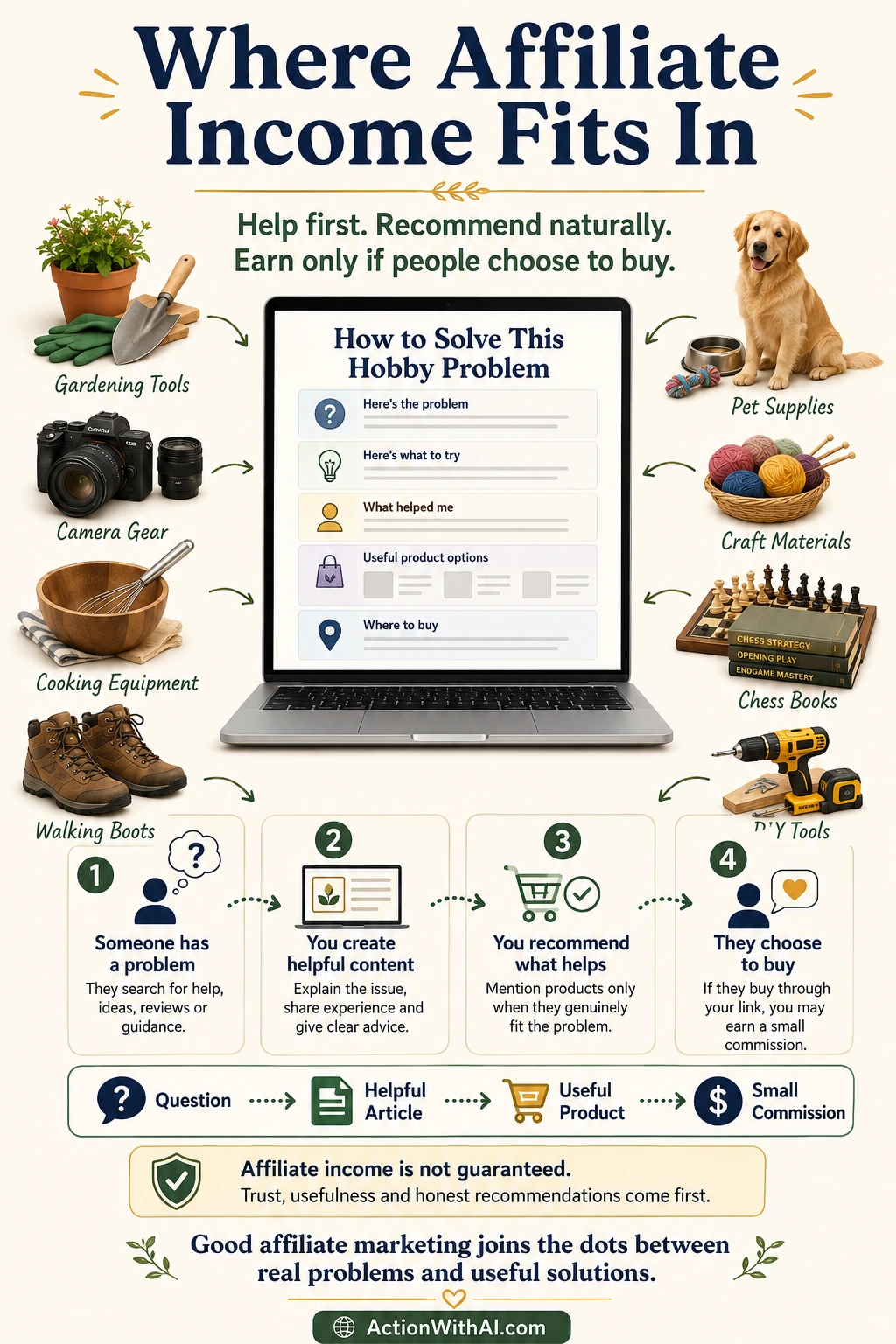
A birdwatching website can potentially earn income through affiliate marketing, but it is important to understand the process properly.
Affiliate marketing simply means recommending a product, service or resource. If someone clicks your link and buys, you may earn a small commission at no extra cost to them.
But the recommendation should be natural.
For example, if an article explains why birds are not using a feeder, useful recommendations might include:
- a seed feeder;
- a suet feeder;
- a ground feeding tray;
- a bird bath;
- sunflower hearts;
- suet pellets;
- dried mealworms;
- a feeder cleaning brush;
- a squirrel-resistant feeder.
Those recommendations make sense because they relate to the reader’s problem.
The article should explain why each item might help.
For example:
“A ground feeding tray can be useful if you regularly see robins or blackbirds, because they are often more comfortable feeding from a low surface than from a hanging feeder.”
That is helpful.
It joins the dots between the problem and the product.
Income Is Not Guaranteed
It is important to be realistic.
A hobby website is not easy money. It is not a quick fix. It is not a guarantee of income.
You still need to create useful content, understand your audience, build trust, keep learning, and take consistent action.
But if you enjoy the hobby, the process itself can be rewarding.
You get to learn more about birdwatching, help other people, create useful articles, and build something around an interest you already enjoy.
Any income opportunity should be seen as secondary to that.
The Birdwatching Website Journey
Here is the overall journey in simple terms:
- Choose a birdwatching angle — such as garden birds, feeders, gear, identification or photography.
- Find real questions — from Reddit, search suggestions, forums, groups, comments and your own experience.
- Use AI to plan content — turn questions into outlines, drafts, images and article ideas.
- Add your own experience — improve the content with judgement, examples and practical detail.
- Publish on WordPress — build your website one helpful article at a time.
- Create visual content — use images and Pinterest pins to attract readers.
- Recommend naturally — suggest useful products only when they genuinely fit the problem.
And always Keep learning — improve your site, content, structure and confidence over time.
This is why I think hobby websites are so interesting.
You are not just “starting a blog.”
You are creating a helpful resource around something you enjoy.
How This Connects to Wealthy Affiliate
If you like the idea of building a birdwatching hobby website, the next question is:
How do you learn the full process?
This is where Wealthy Affiliate comes in.
I have been a member of Wealthy Affiliate for over 10 years, and everything I know about the online world has come from what I learned there.
The main reasons I recommend Wealthy Affiliate are:
- Training: it teaches the website-building and affiliate marketing process step by step.
- Tools in one place: domains, hosting, AI tools, keyword research, training and support are brought together.
- Community: you can learn alongside other people who are building websites too.
- Free starter access: you can take a look inside before committing to a paid membership.
You do not have to join Wealthy Affiliate to benefit from the ideas on this site. I am creating guides and examples freely to help people understand how hobby websites work.
But if you want a structured platform to help you learn, build and take action, I wholeheartedly recommend taking a look at Wealthy Affiliate.
Want to Learn the Full Hobby Website Process?
This birdwatching example is one way to see how a hobby can become a helpful website.
If you like the idea of building a site around your own interests, I’ve written a full guide explaining how AI tools, helpful content and Wealthy Affiliate can help you get started.
Read the Full Hobby Website Guide
Explore the Birdwatching Website Series
This page gives you the overview. You can also explore each part of the process in more detail:
- 7 Birdwatching Website Ideas for Beginners
- Using AI to create Bird Identification Cards
- How to Find Birdwatching Article Ideas on Reddit
- How AI Turns a Birdwatching Question Into an Article
- Beginner Guide to Publishing With WordPress
- How Affiliate Recommendations Fit Into a Birdwatching Website
- Build Your First Hobby Website With AI
Final Thought
A birdwatching hobby website does not need to begin perfectly.
It can begin with one question.
One article.
One helpful answer.
Maybe you start by answering why birds are not using a feeder. Then you write about the best food for robins. Then you explain where to place a bird bath. Then you compare beginner binoculars. Then you create a guide to common garden birds.
Piece by piece, you build something useful.
AI can help you move faster. WordPress gives you somewhere to publish. Wealthy Affiliate can help you learn the wider process. But the most important part is action.
If you love birdwatching, your interest could become more than a private hobby.
It could become a helpful website that teaches, guides, connects and maybe even creates an opportunity to earn through useful recommendations.
Start with the hobby. Help people first. Use AI wisely. Take action.