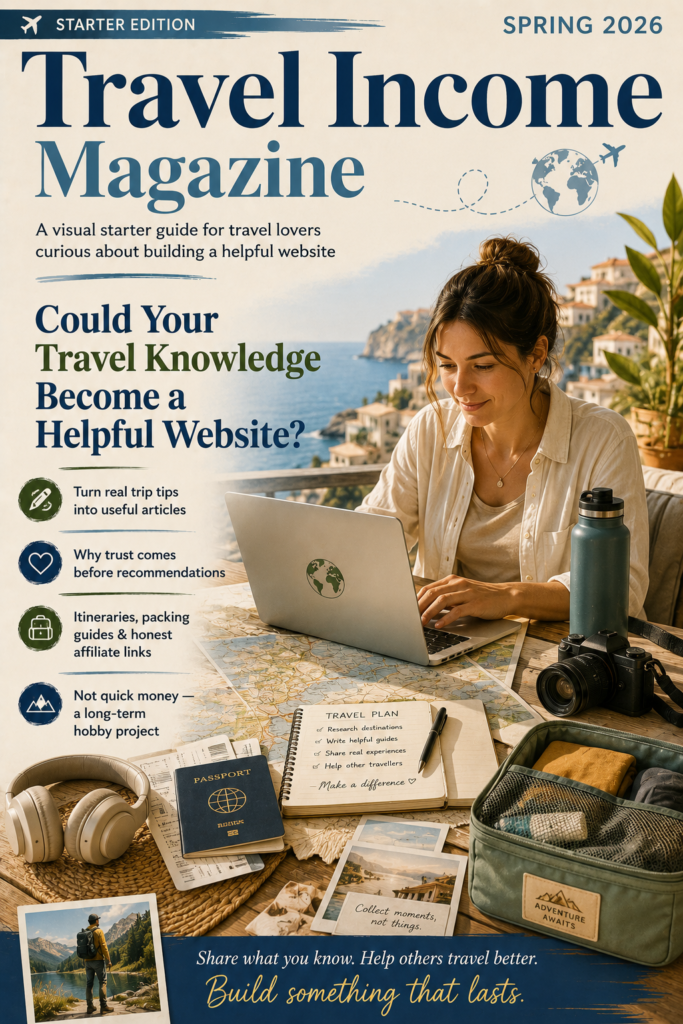
Most people think of a travel website as something only full-time travel bloggers, influencers, or professional writers can build.
But the starting point can be much simpler than that.
If you enjoy planning trips, comparing places to stay, working out transport options, finding good-value activities, packing efficiently, or helping friends avoid common travel mistakes, you already have knowledge that could help someone else.
A helpful travel website does not need to begin with luxury trips or dramatic adventures. It can begin with practical experience: what worked, what did not, what you would book again, what you would avoid, and what you wish you had known before you went.
The real opportunity is not just “travel.” It is helping a specific kind of traveller make better decisions.
That might be weekend city breaks, train travel, family holidays, budget trips, over-50s travel, solo travel, accessible travel, walking holidays, or first-time visits to popular destinations.
The question is not simply:
“Can travel make money online?”
A better question is:
“What travel knowledge do I already have that could become useful to someone planning a similar trip?”
That is where a travel website begins.
Next, let’s look at why affiliate marketing works best when you start with helping, not selling.
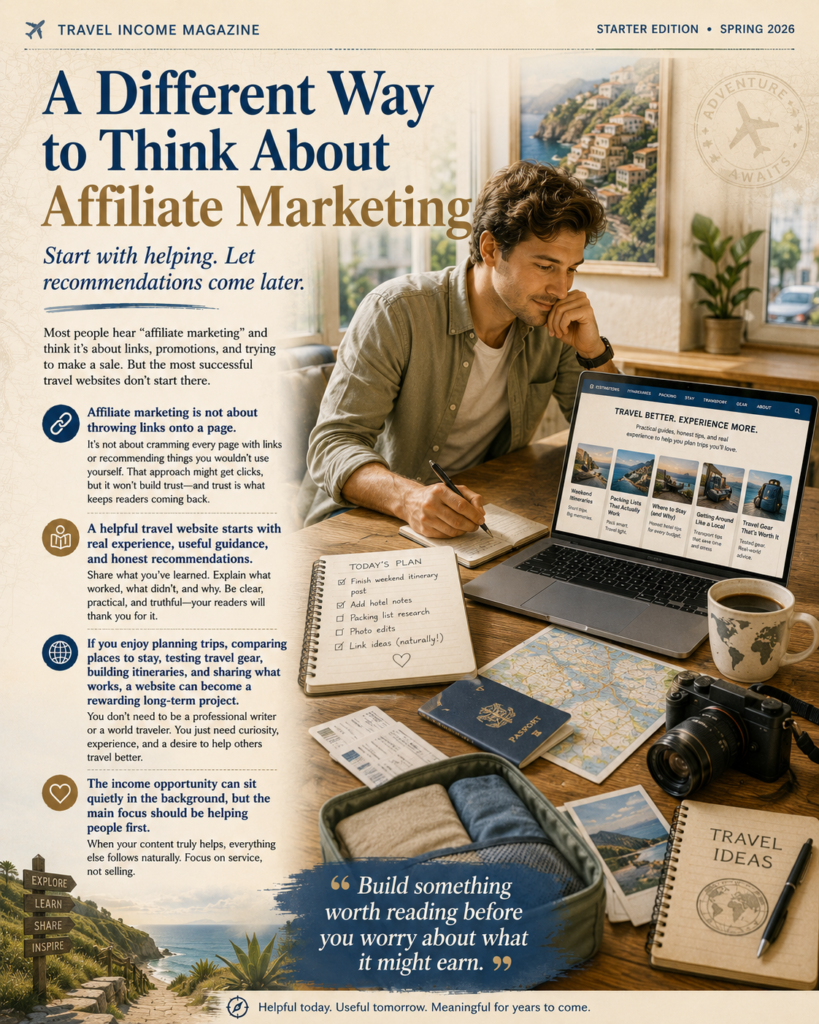
Affiliate marketing often gets explained in the wrong order.
People start with links, commissions, products, and platforms. That makes it sound like the aim is simply to push people toward bookings or purchases.
But a better travel website starts somewhere much more human.
It starts with the traveller’s problem.
- Someone wants to know where to stay.
- Someone is unsure whether a tour is worth booking.
- Someone does not know how to get from the airport to the city centre.
- Someone is worried about overpacking.
- Someone wants to know whether three days is enough for a destination.
- Someone wants to avoid wasting money on the wrong hotel, location, luggage, pass, or activity.
Your job as the website owner is to help them make a better decision.
That might mean explaining what you did, what worked, what went wrong, what you would change next time, and which resources actually helped.
Affiliate links can come later, but they should sit inside useful content. The reader should feel helped before they ever feel sold to.
If your article is genuinely useful, a recommendation can feel natural.
If the article only exists to promote a product, the reader will usually sense that very quickly.
This is why your own travel experience matters. You do not have to know everything. You just need to be able to help someone who is one step behind you.
Next, let’s look at the advice many travellers are already giving for free every day — and how those helpful answers can become lasting website content.
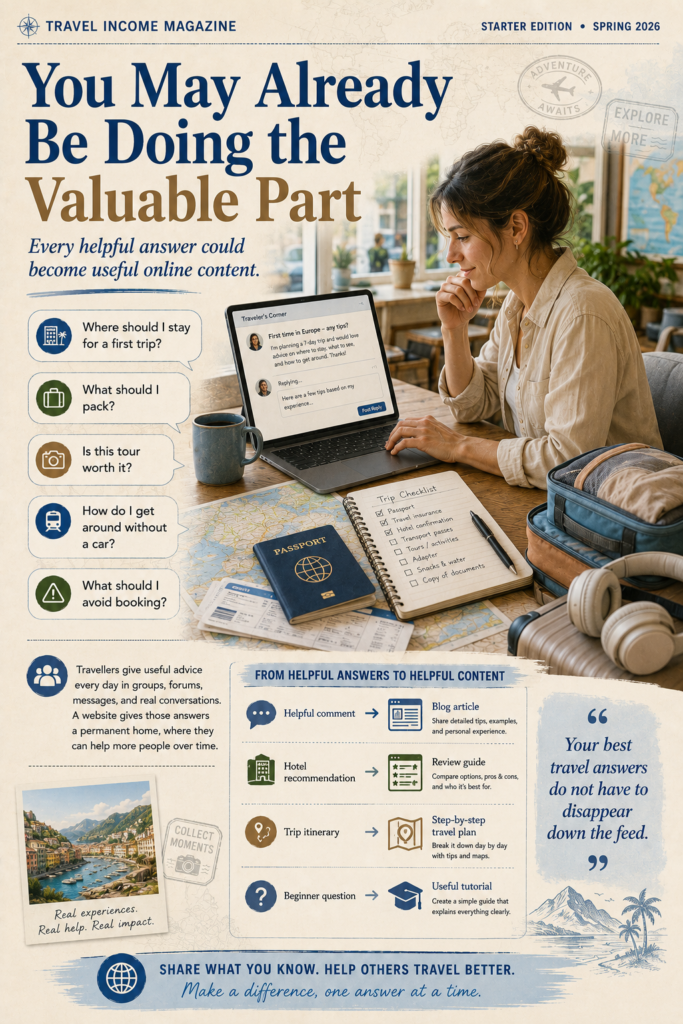
Travellers are often helpful without thinking of it as anything special.
- You might answer a friend’s question about where to stay.
- You might tell someone which area of a city felt most convenient.
- You might explain whether a travel pass was worth buying.
- You might warn someone not to book a hotel too far from the main transport links.
- You might share a packing tip that made your trip easier.
- You might recommend a walking tour, a day trip, a luggage setup, or a transport app.
At the time, it is just a quick answer.
But those answers often contain the raw material for useful online content.
- A short comment about where to stay could become a hotel-location guide.
- A reply about what to pack could become a packing checklist.
- A message about a city break could become a full itinerary.
- A warning about a bad booking mistake could become an article that saves other people time, money, and stress.
The important shift is this:
Instead of letting your best advice disappear in a comment thread, you organise it into articles that people can find again and again.
That is how a travel website becomes useful.
You are not inventing content from nowhere. You are collecting real questions, real experiences, real decisions, and real lessons from travel.
And once that content exists, relevant recommendations can naturally sit inside it.
Next, let’s look at how affiliate marketing actually works when someone finds your travel article and follows one of your recommendations.
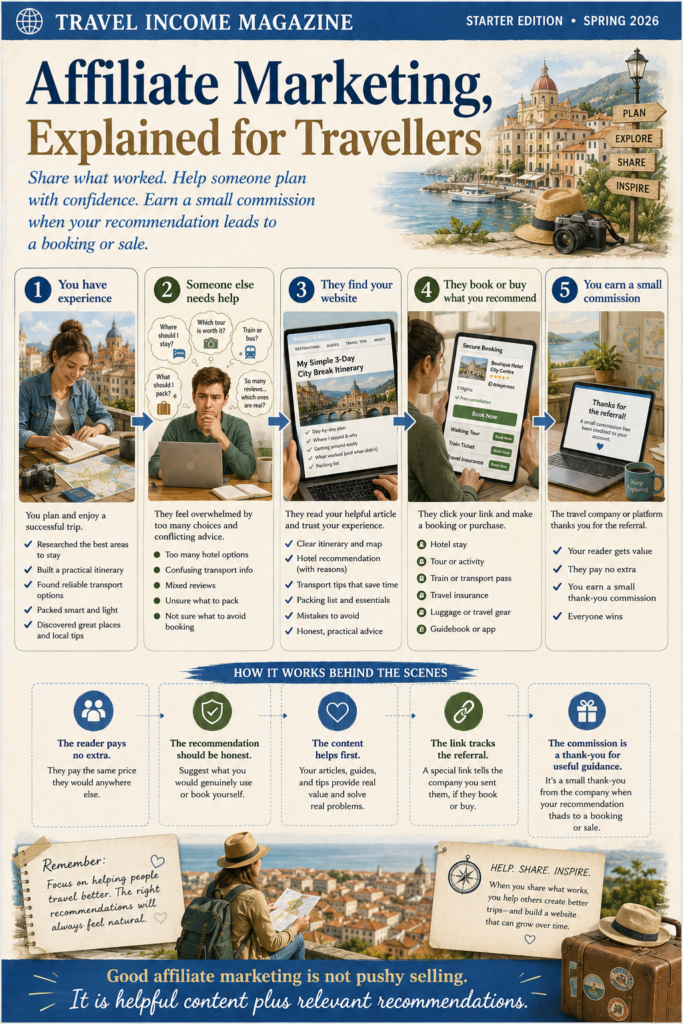
Affiliate marketing is easiest to understand when you see it as a chain of helpful decisions.
First, you have experience. You planned a trip, made choices, tested options, learned lessons, and came back with useful knowledge.
Second, someone else is trying to plan something similar. They feel unsure because there are too many choices: hotels, flights, trains, tours, luggage, travel insurance, transport passes, guidebooks, and conflicting online reviews.
Third, they find your website. Your article gives them structure. It explains the trip, the options, the mistakes, the costs, the practical details, and what you would do differently.
Fourth, where it genuinely helps, you recommend something: a hotel area, a booking platform, a tour, a train route, a backpack, packing cubes, travel insurance, or a useful app.
Fifth, if the reader clicks your affiliate link and books or buys through it, you may earn a small commission. The reader does not pay extra because of your link.
That is the simple version.
But the important part is not the commission.
The important part is that your content helped the reader move from confusion to confidence.
That is what makes affiliate marketing feel fair and useful rather than pushy.
The reader should not feel tricked. They should feel:
“This article helped me understand what to do.”
That is why your recommendations must be honest, relevant, and properly explained.
Next, let’s compare two different types of travel websites: one that pushes products quickly, and one that builds trust before recommending anything.
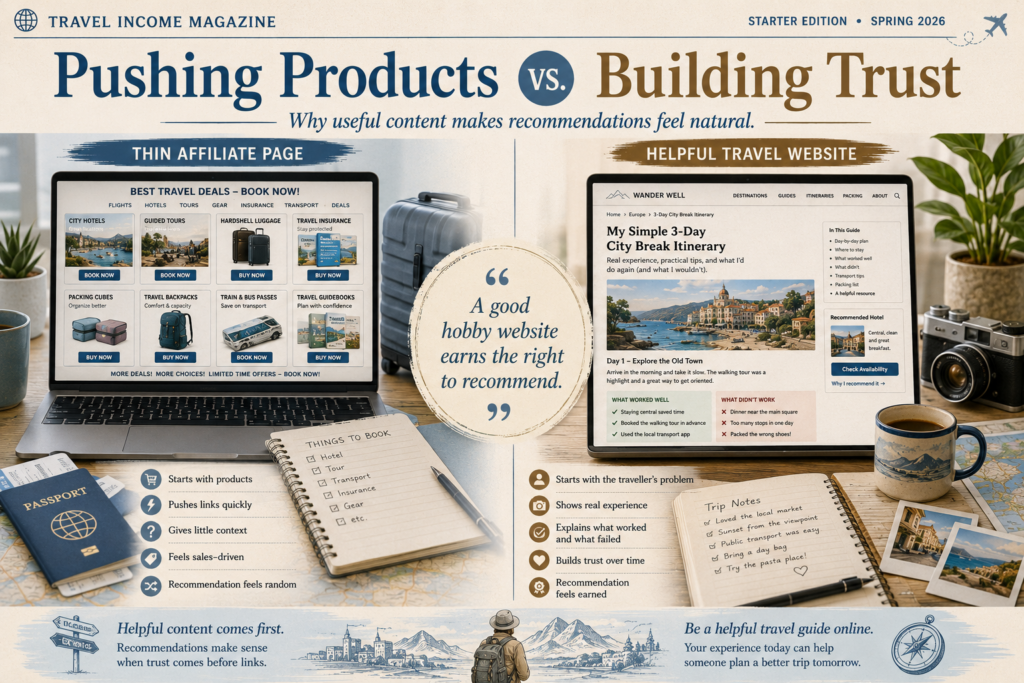
There is a big difference between a page that lists travel products and a page that genuinely helps someone plan a better trip.
A thin affiliate page starts with products.
It might show hotel boxes, luggage links, tour buttons, insurance offers, and “book now” prompts before the reader has been properly helped. There may be little explanation of who the recommendation is for, what problem it solves, or whether the writer has any real experience.
That kind of page can feel shallow.
The reader may wonder:
“Is this being recommended because it is genuinely useful, or just because there is a commission?”
A helpful travel website feels different.
It starts with the traveller’s problem.
Maybe the reader wants a simple three-day city break itinerary. Maybe they want to know where to stay without hiring a car. Maybe they want to avoid booking the wrong area. Maybe they are travelling with children, luggage, mobility concerns, or a tight budget.
The article explains the situation properly. It shares real experience. It includes practical notes. It shows what worked and what did not. It helps the reader understand the decision.
Then, when a recommendation appears, it feels earned.
- A hotel recommendation makes sense because the article has explained the location.
- A packing cube recommendation makes sense because the article has shown the packing problem.
- A tour recommendation makes sense because the article has explained why it saved time or improved the trip.
Trust changes how a recommendation feels.
A thin page says:
“Click this.”
A helpful page says:
“Here is what I learned. This may help you too.”
Next, let’s turn this into a practical worksheet and look at what your own travel knowledge could become.
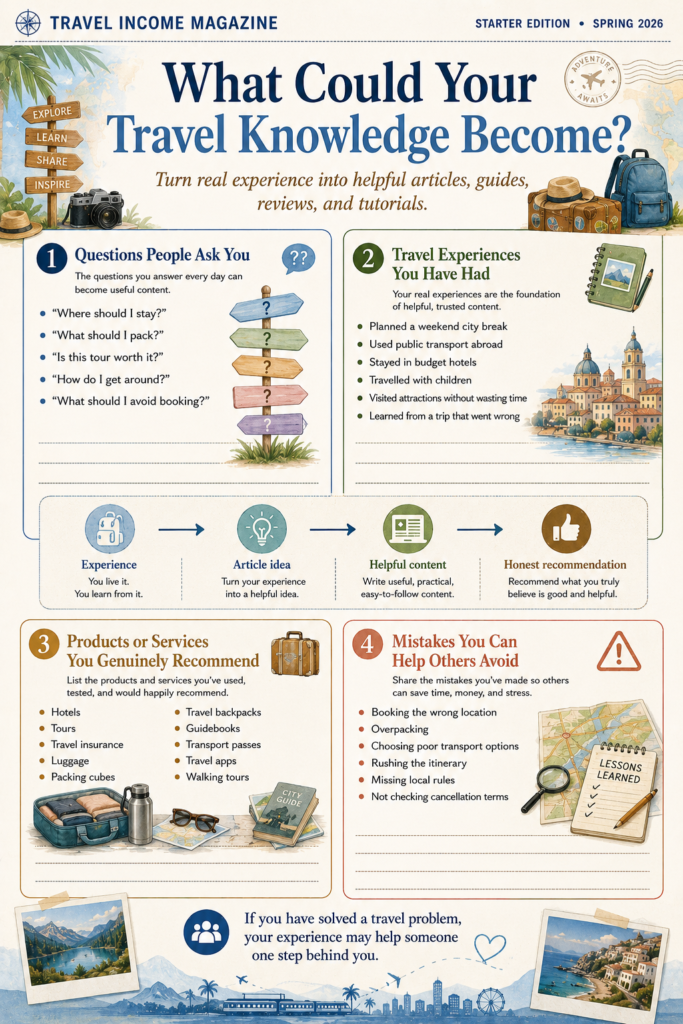
A travel website becomes much easier to imagine when you break your knowledge into simple categories.
Start with the questions people already ask you.
- Where should I stay?
- What should I pack?
- Is this tour worth it?
- How do I get around?
- What should I avoid booking?
Each of those questions could become an article.
Then think about your own travel experiences.
- Maybe you planned a weekend city break.
- Maybe you used public transport abroad.
- Maybe you stayed in budget hotels.
- Maybe you travelled with children.
- Maybe you visited popular attractions without wasting time.
- Maybe you learned from a trip that went wrong.
Those experiences are not wasted. They are exactly what can make your content useful.
Next, list the products and services you genuinely recommend.
These might include hotels, tours, travel insurance, luggage, packing cubes, backpacks, guidebooks, transport passes, travel apps, or walking tours.
Finally, think about mistakes you can help others avoid.
- Booking the wrong location.
- Overpacking.
- Choosing poor transport options.
- Rushing the itinerary.
- Missing local rules.
- Not checking cancellation terms.
This is where good travel content comes from.
You are not just writing random articles. You are turning real experience into helpful guidance.
The basic flow is:
- Experience becomes an article idea.
- The article becomes helpful content.
- Helpful content can include honest recommendations.
- Honest recommendations can create affiliate income opportunities over time.
Next, let’s look at where Wealthy Affiliate fits in if you want help learning how to turn these ideas into a real website.
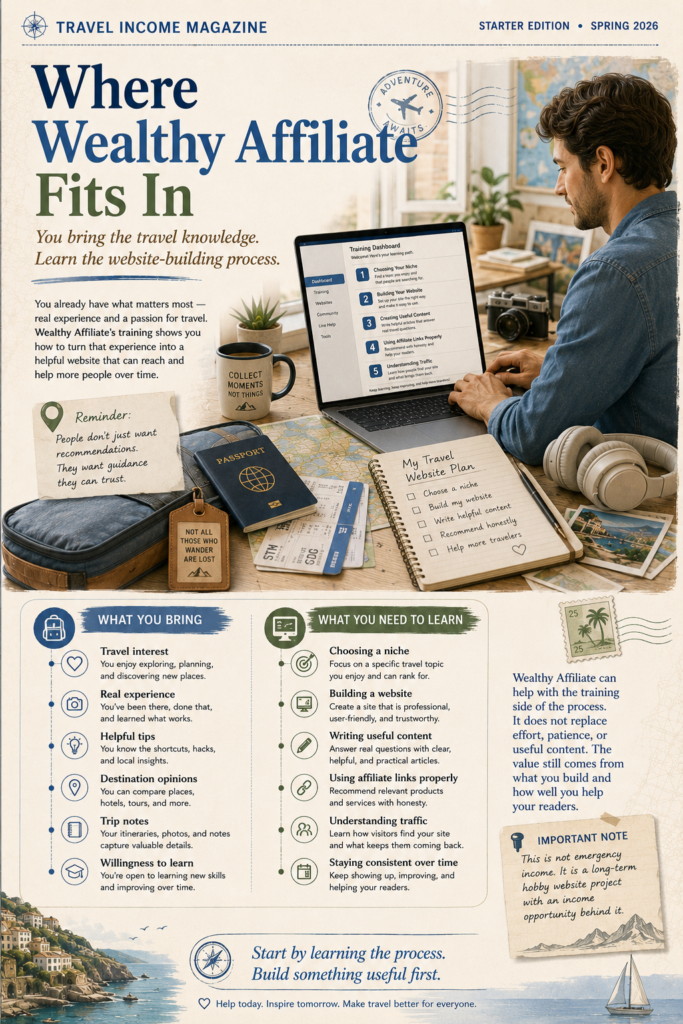
If your travel experience is the raw material, the next step is learning how to turn it into a website.
That is where Wealthy Affiliate can fit into the process.
You may already bring the most important ingredients:
- Travel interest.
- Real experience.
- Helpful tips.
- Destination opinions.
- Trip notes.
- A willingness to learn.
But there are still practical skills to understand.
- How do you choose a specific niche?
- How do you build the website?
- How do you write useful content?
- How do affiliate links work?
- How do people find your articles?
- How do you stay consistent long enough to build trust?
Wealthy Affiliate can help with the training side of that process.
- It does not remove the need for effort.
- It does not guarantee income.
- It does not replace real experience, useful writing, or patience.
The value still comes from what you build and how well you help your readers.
That is why this should not be treated as emergency income or a quick fix. A travel website is a long-term project. It takes time to create useful articles, build trust, attract visitors, and understand what your audience needs.
But if you enjoy travel, planning, researching, sharing tips, and helping other people make better decisions, it can be a rewarding project to build.
Start with the useful part.
- Help someone plan better.
- Share what you know.
- Document what worked.
- Recommend honestly.
- Learn the website-building process step by step.
The income opportunity can sit quietly in the background while the main focus stays where it should be:
Helping people travel better.